
Active Warrants in Grand Traverse County
Grand Traverse County has no single web page that lists active warrants. Warrants are legal orders. A judge or magistrate signs them, and county law enforcement carries them out. Most local warrants come from the 86th District Court or the 13th Circuit Court, the two trial courts that handle criminal matters in Grand Traverse County. The Sheriff's Office and its Corrections Division then serve those orders and book people into the county jail.
Because there is no live warrant lookup, confirming an active warrant means asking the right office directly. The district court can tell you whether a missed date or a probation issue produced a warrant in one of its cases. The sheriff and jail handle warrants once they are ready to be served. A public records request fills the gap when nothing is posted online. A warrant record ties back to a charge, so the full case detail lives in the Grand Traverse County criminal court records for that case.
Not every warrant is a county warrant. A smaller share are federal, and those move through the United States court system rather than the county courts. Federal cases in this region are reviewed by the U.S. Court of Appeals for the Sixth Circuit, and its official court overview explains the circuit's role.
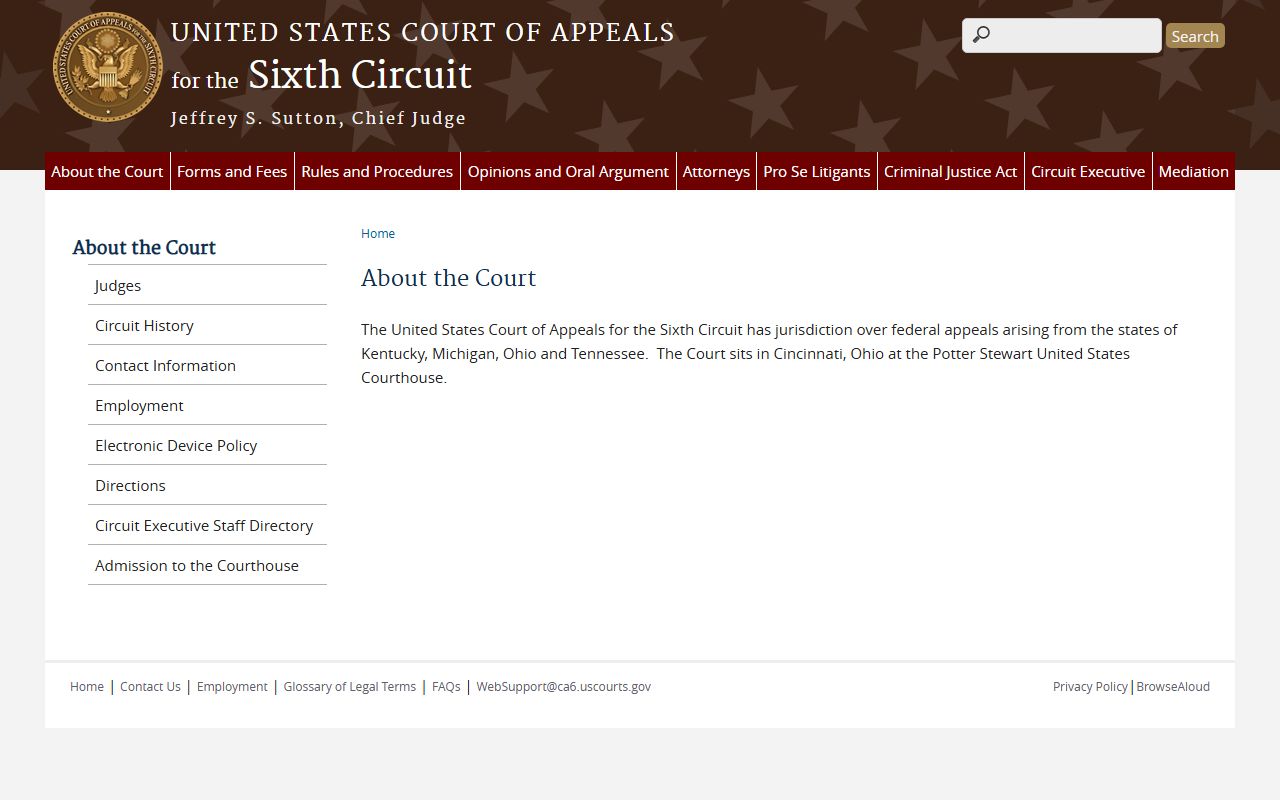
The Sixth Circuit covers Kentucky, Michigan, Ohio, and Tennessee. That matters for a Grand Traverse County warrant search only when the underlying matter is federal, since federal warrants are not held by the county sheriff and will not show up through local county channels.
Types of Warrants in Grand Traverse County
Warrants come in a few forms, and the type tells you why it was issued. Two matter most to residents: the arrest warrant and the bench warrant. A bench warrant is common, and the county's own court FAQ describes exactly when one gets issued.
- Arrest warrant
- An order signed after a judge or magistrate finds probable cause that a person committed a crime, allowing police to make an arrest.
- Bench warrant
- An order the judge issues from the bench when someone fails to do what a case requires, such as missing a scheduled court date.
- Search warrant
- An order that lets law enforcement search a specific place or item for evidence, separate from any order to arrest a person.
- Probation-violation warrant
- A warrant tied to a probation case, issued when a person misses a probation appointment or is accused of breaking probation terms.
Bench warrants and probation-violation warrants are the ones most people ask about, because both can happen even when no new crime is charged. Simply missing an appearance can be enough.
Note: A bench warrant does not expire on its own, so an old missed date can still lead to an arrest years later during a traffic stop.
How to Check for a Warrant in Grand Traverse County
With no online portal, checking for a warrant is a matter of working through the county's fallback chain in order. Start with the court, move to the sheriff and jail, and use the records process last. Talking to an attorney first is wise if you think a warrant may exist.
- Review the 86th District Court criminal and probation FAQ material, then call the court to ask whether a missed date or probation issue created a warrant in a case.
- Call the Sheriff's Office non-emergency line for general warrant and law-enforcement questions.
- Contact the Corrections Division at the jail, which handles warrants once they are ready to be served and can explain how to turn yourself in.
- If the person may already be booked, check custody status through MI-VINE rather than calling repeatedly.
- Ask the Prosecuting Attorney's Office about the status of a filed criminal case.
- File a public records request with the county when nothing is available online.
- Consult a lawyer before acting on anything you learn, especially before surrendering.
Each step points to a real office. None of them is a database you can search from home, so plan on a phone call or a written request rather than an instant result.
Grand Traverse County Warrant Channels and Contacts
Grand Traverse County spreads warrant information across several offices, and each one answers a different question. The table below shows which channel to use and what each can actually tell you. Two of these, the Sheriff's Office and the jail's Corrections Division, are where a warrant is served, so their contact details follow the table.
| Channel | Contact | What It Tells You |
|---|---|---|
| 86th District Court | 231-922-4580 | Whether a missed date or probation issue created a warrant |
| Sheriff's Office | 231-922-4550 | General warrant and law-enforcement questions |
| Corrections Division (Jail) | 231-922-4532 business, 231-922-4530 after hours | Turn-yourself-in and booking questions |
| MI-VINE | Free, confidential, 24/7 | Custody status when the person is already in jail |
| Prosecuting Attorney | 231-922-4600 | Status of a filed criminal case |
| Records Request (FOIA) | County records request page | Released records when nothing is posted online |
The two law-enforcement offices below are the ones that hold and serve warrants in the county. The Sheriff's Office answers general questions, while the Corrections Division handles the jail side.
Grand Traverse County Sheriff's Office
851 Woodmere Avenue
Traverse City, MI 49686
231-922-4550
Emergency: 911
Grand Traverse County Corrections Division
320 Washington Street
Traverse City, MI 49684
231-922-4532 (business)
After hours: 231-922-4530. Business hours Monday to Friday, 8 a.m. to 4 p.m.
What Triggers a Bench Warrant in Grand Traverse County
The county's district court FAQ is direct about how bench warrants happen. Most are avoidable, because they follow a missed obligation rather than a new arrest. If you miss a court date, the judge may issue a warrant and your bond may be forfeited. Probation cases carry their own triggers.
- Missing a scheduled court date in a criminal or traffic case
- Missing a probation appointment with a probation officer
- Violating a term of probation the court set
After a probation violation is alleged, the person may be arrested or may turn themselves in at the jail. From there they either post bond or see a judge the next business day. Acting early, before a warrant is served, almost always leaves more options open.
What to Do About a Grand Traverse County Warrant
If you learn a warrant is out for you, the county's guidance is to resolve it rather than wait. For a bench warrant from a missed date, that usually means turning yourself in to the jail so the matter can move forward. Once booked, a person can post bond or wait to see a judge the next business day.
The steps are simple to describe. Confirm the warrant through the court or sheriff. Line up bond money if the warrant lists an amount. Then surrender at the jail or contact the court to schedule your appearance. Handling it on your own terms is far better than being picked up during a traffic stop or a routine contact with police.
Important: Talk to a lawyer before you surrender or answer questions, since an active warrant can involve bond, new charges, and rights you do not want to waive by accident.
Grand Traverse County Warrant Records Requests
When nothing is posted online, Michigan's Freedom of Information Act is the formal path to county-held records. Grand Traverse County has a records request page that routes these requests to the right office. FOIA starts from a presumption that public records are open unless a specific exemption applies.
The request and fee rules live in statute. Michigan's MCL 15.235 sets the timeline a public body must follow and how it may charge for copies and search time. Reviewing it before you file helps you write a request that is specific enough to answer quickly.
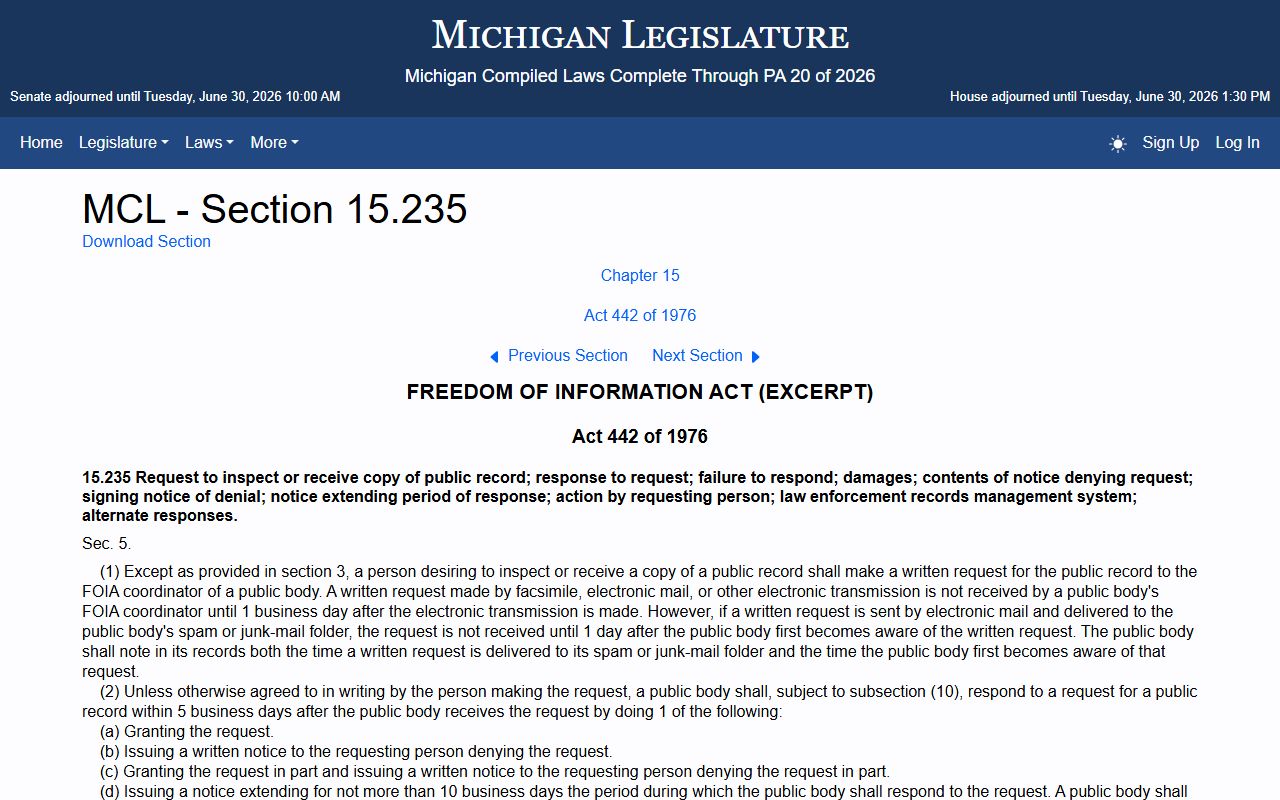
That statute is why a well-drafted request names the record, the date range, and the office likely to hold it. Not every record comes back, though. Some are withheld under the law's exemptions.
The exemptions sit in MCL 15.243, which lists the categories a public body may keep from release. Active investigations, certain law-enforcement material, and privacy interests can all support a denial.
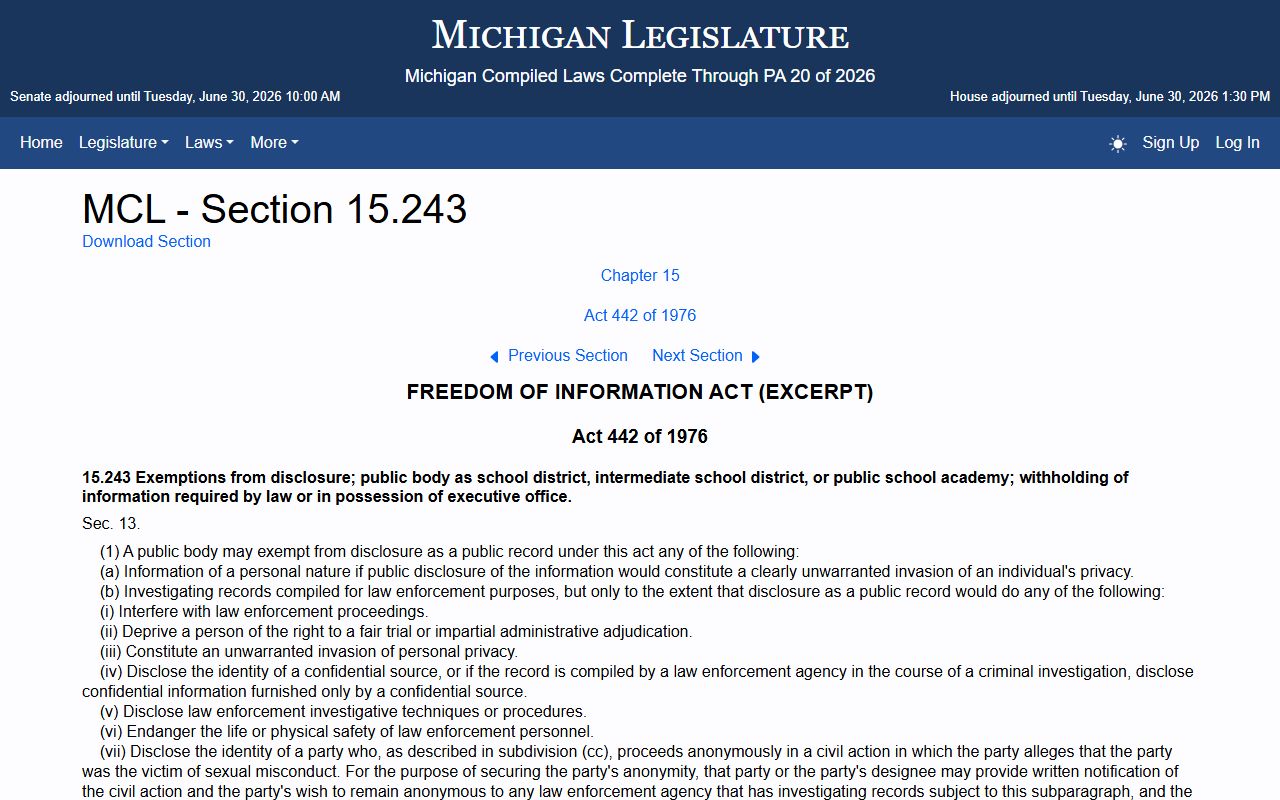
Knowing the exemptions helps you read a denial. If a warrant record is tied to an open investigation, expect the county to cite one of these grounds rather than hand over the file.
Note: A FOIA request works best for a specific named record, not for a broad ask like every warrant in the county, which an office can reject as too vague.
Custody Status Through MI-VINE
When the concern is whether someone is already in jail on a warrant, the county's answer is MI-VINE. It is the only custody-status channel Grand Traverse County offers to the public at this time. The service is free, confidential, and available around the clock.
Does MI-VINE list warrants? No. MI-VINE reports custody status and case-status updates for a person already in the system, not a list of open warrants. To confirm custody or booking detail once someone is held, the jail roster and booking side live in the Grand Traverse County inmate records.
For updates on a filed charge, the Prosecuting Attorney's Office can speak to case status. Between MI-VINE for custody and the prosecutor for the case, most status questions have an official answer even without a warrant portal.
Clearing Old Grand Traverse County Warrant Cases
Resolving a warrant is one step. Cleaning up the conviction it may have led to is another. Michigan now sets aside some convictions automatically, which can remove them from public-facing systems over time. Grand Traverse County publishes plain-English guidance and points to the state statutes that control the process.
The automatic path is built on MCL 780.621g, the statute that sets aside qualifying convictions without an application once the conditions are met.
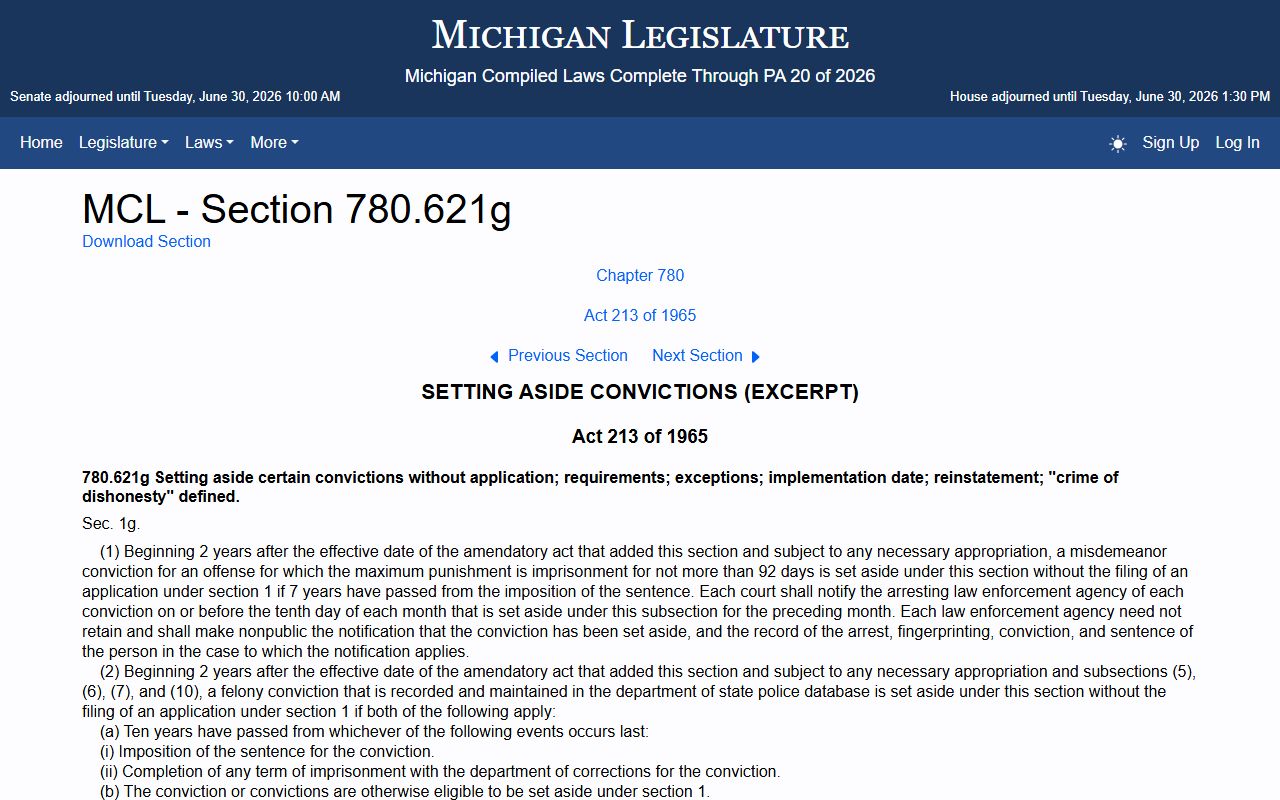
Automatic set-aside does not touch every case, and it does not erase the underlying state record. It changes what shows in public systems for eligible convictions. Convictions that do not qualify follow the application route instead.
That route runs through MCL 780.623, which sets the procedures and limits for asking a court to set aside a conviction.
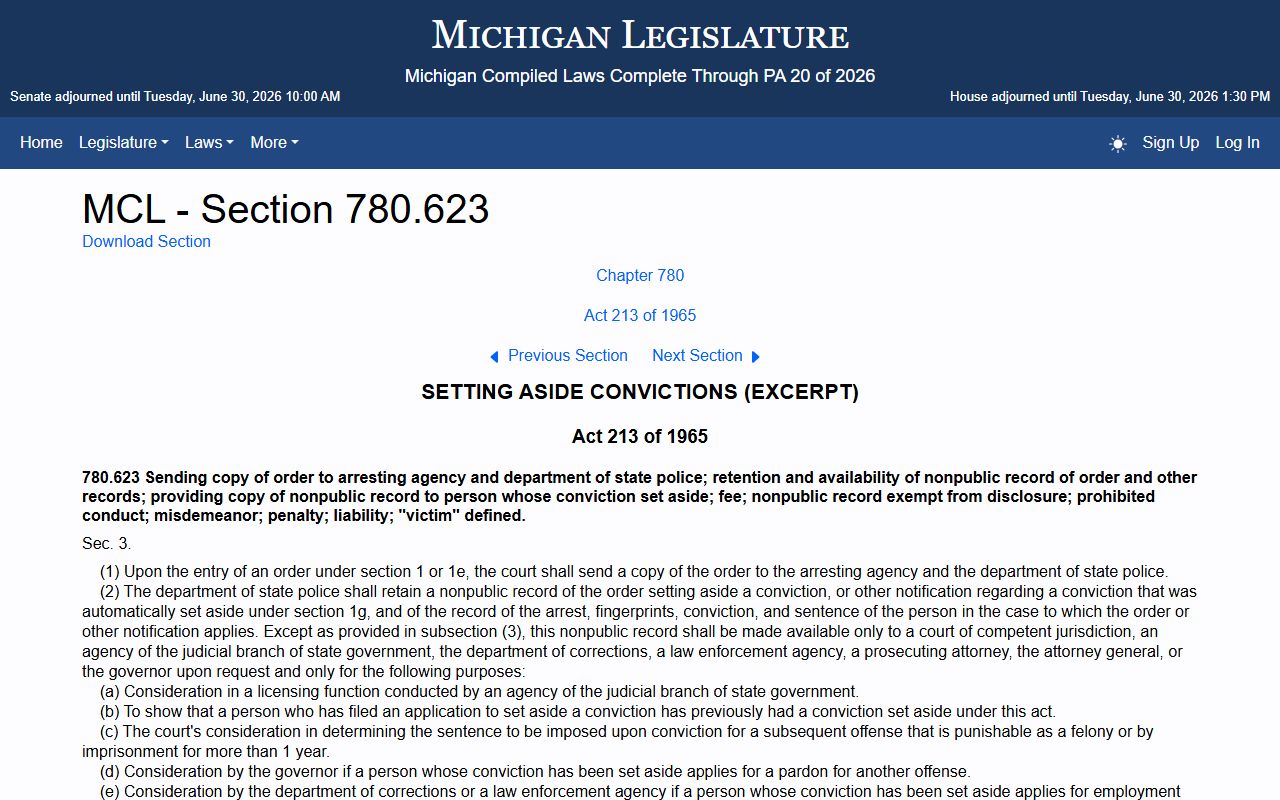
Reading that statute shows which convictions are eligible and how many a person may clear. Confirm status first through a Michigan State Police record check or the court of conviction, then file in the court that entered the conviction if the case qualifies.