
Grand Traverse County Jail Records and Custody Status
The county runs its jail through the Corrections Division and the Sheriff's Office. Both are part of the same sheriff ecosystem. Together they operate the Grand Traverse County Correctional Facility, staff court services, and move sentenced people to state prison. What they do not do is publish a live public roster you can browse by name. The county pages link a "Find Someone in Jail" option, but that link does not resolve to a traditional public roster table.
Because no online roster exists, the county's own recommendation for custody status is MI-VINE. It is a free, confidential service that runs 24 hours a day. It tells a caller or registered user whether a person is in custody and pushes case-status updates. The county states that custody status is offered through VINE at this time. The county Victim Notification page explains how the service works and who can use it.
A custody check has limits. A county jail search does not cover people held by the Michigan Department of Corrections, the federal Bureau of Prisons, or immigration authorities. Those are separate systems with their own locators. Sentenced state prisoners and federal defendants leave county custody, so the county channel stops showing them.
How to Check Custody Status and Use MI-VINE
Checking on a Grand Traverse County inmate follows a short path. The steps below move from the free custody-notification service to a direct call when you need a live answer. Start with VINE, then use the Corrections Division line if the search does not return what you expect.
- Open the county Victim Notification (MI-VINE) page to reach the free custody-status service.
- Search by the person's name or, if you have it, an assigned offender or booking identifier.
- Register a phone number or email to receive automatic custody and case-status alerts.
- Confirm the match by name, and note that VINE reports custody status rather than full charge detail.
- If VINE cannot confirm the record, call the Corrections Division during business hours or the after-hours line.
- For case-status questions rather than custody, call the Prosecuting Attorney's Office.
VINE is built for victims, families, and the public. Registration is what turns a one-time lookup into ongoing alerts, so a caller learns of a release without checking again.
MI-VINE Lookup and Search Fields
Because the search here is a custody-notification tool, not a booking database, the fields you use are simpler than a full roster form. The table below lists what MI-VINE lets you search and register by. These are custody-check inputs, not fields from a county roster portal, which does not exist for public use.
| Field Label | Type | Required | Notes |
|---|---|---|---|
| Offender Name | Text | Yes | Search by last and first name; the primary way to find a record. |
| Offender / Booking ID | Text | No | Optional identifier that narrows a common name if you already have it. |
| Facility / County | Select | No | Confirms you are checking Grand Traverse County custody. |
| Phone for Registration | Phone | No | Registers a number for automatic custody and release alerts. |
| Email for Registration | No | Adds email notifications alongside or instead of phone alerts. |
Correctional Facility and Sheriff's Office Contacts
When VINE cannot answer a question, a phone call to the jail usually can. The Corrections Division runs the Grand Traverse County Correctional Facility and answers custody and inmate-services questions. The Sheriff's Office handles reports, FOIA requests, and general law-enforcement matters from a separate address. Both offices sit in Traverse City, the county seat.
Grand Traverse County Correctional Facility
Corrections Division
320 Washington Street
Traverse City, MI 49684
231-922-4532 (business, Mon-Fri 8 a.m.-4 p.m.)
231-922-4530 (after hours)
Grand Traverse County Sheriff's Office
Sheriff Mike Shea
851 Woodmere Avenue
Traverse City, MI 49686
231-922-4550 (non-emergency)
911 (emergency)
The Corrections Division page lists jail services, and the Sheriff's Office page links FOIA requests, report copies, and jail-related tools. Corrections staff also provide bailiffs and security to the county courts.
What a Custody Check Tells You
A custody check is narrower than a booking profile. It confirms whether a person is held and pushes updates as that status changes. The table below shows the fields a Grand Traverse County custody check and VINE registration actually surface. It is not a roster profile with booking photos or bond figures, because the county does not publish that record online.
| Field | What It Shows |
|---|---|
| Custody Status | Whether the person is currently in custody, released, or transferred. |
| Holding Facility | Confirms custody at the Grand Traverse County Correctional Facility. |
| Case-Status Updates | Notifications tied to the person's case as it moves through the courts. |
| Release Alert | An automatic message when custody ends, if you registered a phone or email. |
| Transfer Notice | A flag when a person moves to another system, such as state prison. |
| Registration Contact | The phone or email VINE uses to reach you with alerts. |
For anything beyond custody status, the Prosecuting Attorney's Office at 231-922-4600 handles case-status questions. Charge detail lives with the court file, not the jail. The arrest-to-charge side is covered on the Grand Traverse County arrest records and charges page.
Booking and Intake in Grand Traverse County
After an arrest in the county, a person is brought to the Correctional Facility for intake. Jail staff pick up subjects arrested on local warrants or court orders and process them into custody. The facility runs on published correctional standards. County pages say it follows Michigan Department of Corrections, Federal Bureau of Prisons, ACA, and NCCHC standards for safe, humane treatment and reentry programs.
Intake sorts each person by risk and needs, a step corrections staff call classification. From there the case moves toward a first court appearance. The district court FAQ explains that a person may post bond or see a judge the next business day. Bond and release therefore run through the courts, while the jail holds the person until that step.
- Booking
- The intake process that records an arrested person into the Correctional Facility.
- Classification
- Sorting an inmate by risk and needs to decide housing and supervision.
- Bond
- Money or conditions set by the court that allow release before a case ends.
- Arraignment
- The first court appearance, where charges are read and bond is addressed.
Note: The county does not publish booking photos or a searchable booking-number form for the public, so intake detail comes from the court file or a direct call.
If Someone Is Arrested on a Warrant
Custody often begins with a warrant. The district court FAQ says a missed court date can lead a judge to issue a warrant and forfeit bond. A missed probation appointment or a probation violation can trigger a bench warrant as well. When that happens, the person needs to turn themselves in to the jail.
What happens after a turn-in? The district court FAQ explains that a person arrested on a probation violation may post bond or see a judge the next business day. The jail books the person, and the case returns to the court that issued the warrant.
How do I know if a person in custody has a warrant hold? Use MI-VINE to confirm the person is in custody, then contact the court on the missed-date or probation matter. Warrant detail is handled through the Grand Traverse County warrant search channels, since no public warrant list is posted online.
Who Holds Sentenced and Federal Inmates
The county jail is only one custody system. Once a person is sentenced to prison, county staff deliver the offender to the Michigan Department of Corrections, which then holds them. Federal defendants sit in yet another system run by the Bureau of Prisons and the U.S. Marshals. Each type of inmate is held and checked in a different place.
- County jail, pretrial or short sentence: held at the Grand Traverse County Correctional Facility, checked through MI-VINE or the Corrections Division phone.
- State prison, sentenced: held by the Michigan Department of Corrections and found through the state offender locator.
- Federal custody: held by the Federal Bureau of Prisons and found through the BOP inmate locator.
For federal custody, the Bureau of Prisons runs an online locator open to the public. The BOP inmate locator lets anyone search by name or federal register number.
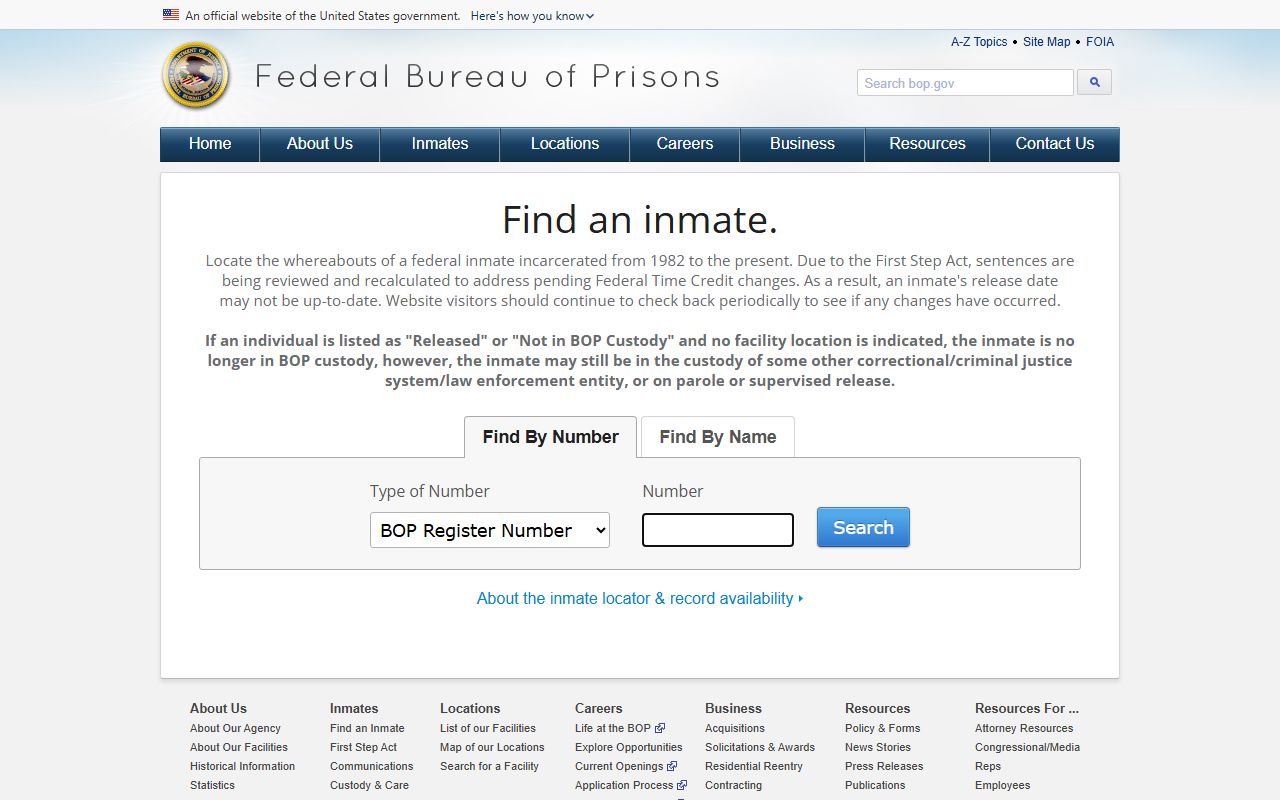
The locator covers people held in federal facilities, which is a separate track from a county jail stay. To understand what data the tool returns and how far back it reaches, the bureau publishes a records note.
The BOP explains that its locator contains federal inmates incarcerated from 1982 to the present. The BOP locator records page describes the coverage and the limits of the federal search.
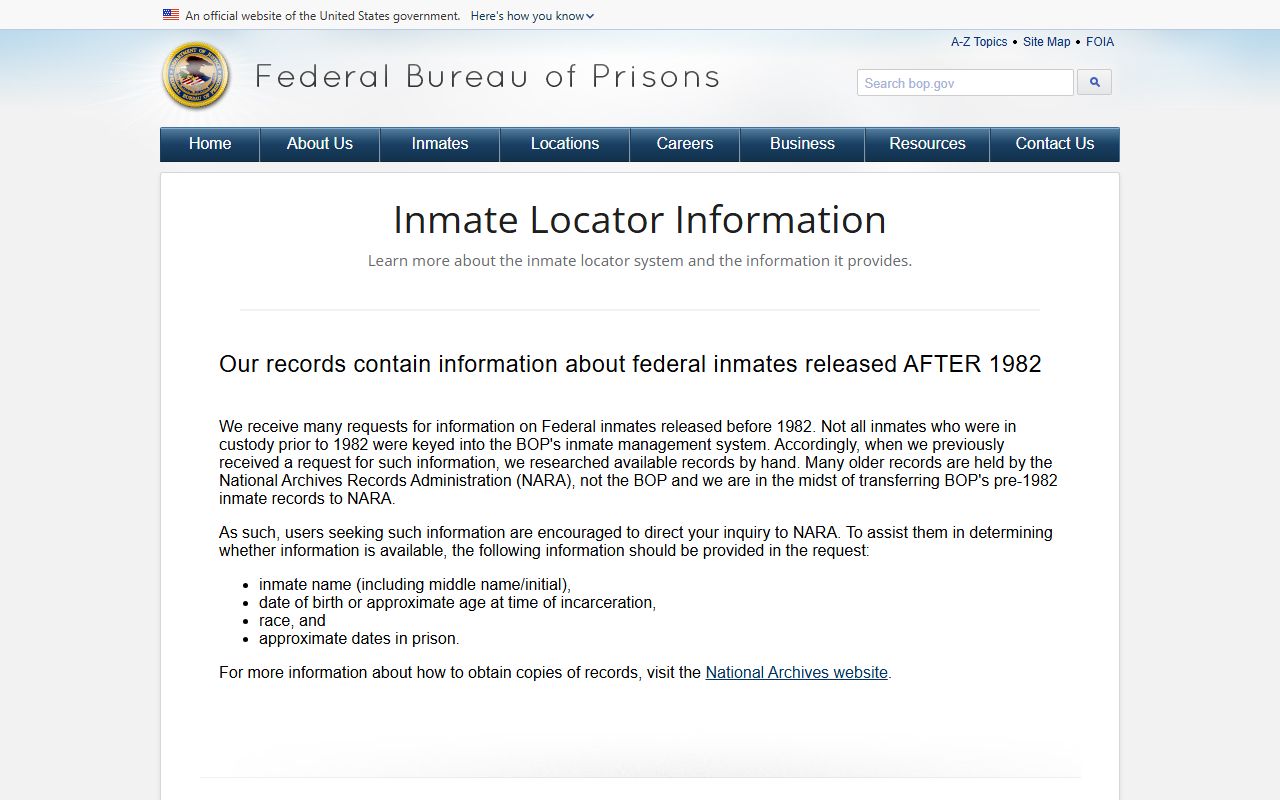
That coverage matters because a person moved from Grand Traverse County into federal custody will show in the BOP system rather than any local channel.
Federal Court Records for County Cases
Grand Traverse County sits in the Western District of Michigan for federal trial-court matters. Federal criminal and civil cases from the county route to that district through the federal court system. When a custody question turns into a case question, the federal court is where records and hearings live. The district publishes its judges and clerk contacts online.
The Western District maintains a directory of its judges and court staff. The Western District judicial directory lists the judges and the electronic-filing help contacts.
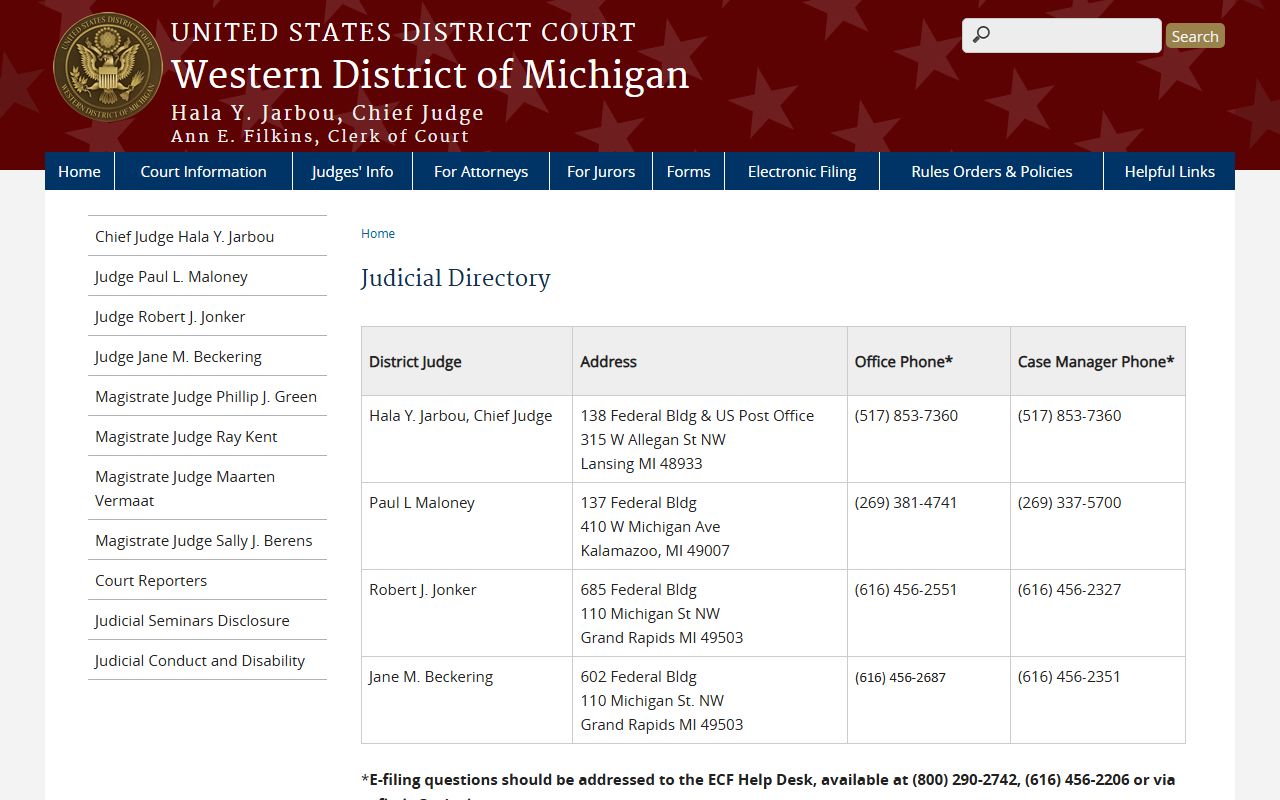
That directory is the starting point for anyone tracking a federal case that began with a Grand Traverse County arrest. Viewing the actual documents, though, requires a federal records account.
Federal case documents are pulled through PACER and the court's electronic filing system. The Western District PACER and NextGen page explains how to set up an account and log in.
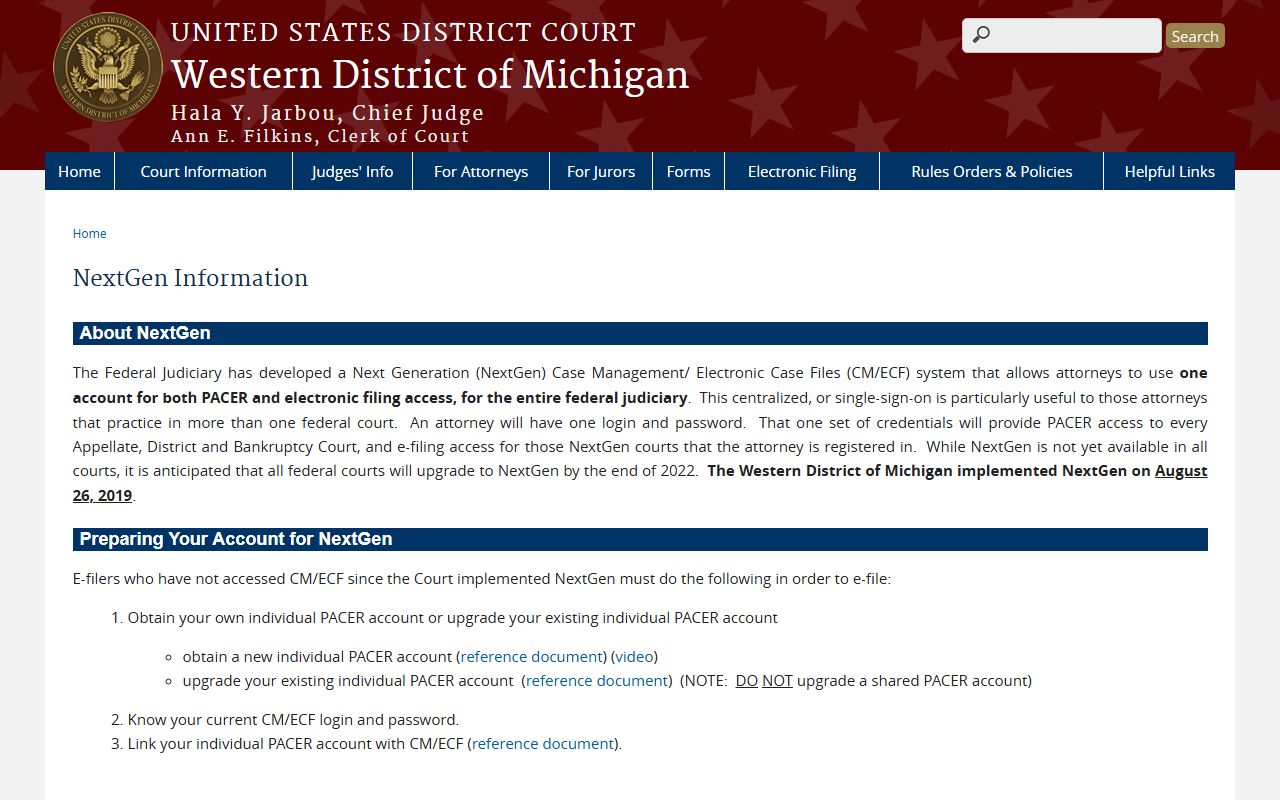
A PACER account is required to view documents, so a family member tracking a federal case will register there rather than at the county jail. The U.S. Marshals Western District office handles federal custody transport in the meantime.
Visitation Rules and Schedule
Visitation at the Grand Traverse County jail is video only, run through Combined Public Communication (CPC). There are two ways to visit. Onsite video kiosks sit in the jail lobby and are free. Remote video visits happen by computer, tablet, or phone for a per-minute charge. Both types require an approved account.
Onsite visits last 30 minutes once a week and use the lobby kiosks. Remote visits cost $0.20 per minute, run up to 20 minutes, and are scheduled in advance. Visitors must apply and be approved, bring a government-issued photo ID and a current photo, and follow dress-code and age rules. All visits are recorded and monitored. The Inmate Visitation page gives the full setup path through inmatesales.com.
| Day | Hours | Type |
|---|---|---|
| Monday | 8 a.m.-4 p.m. onsite / 8 a.m.-9 p.m. remote | Video only |
| Tuesday | 8 a.m.-4 p.m. onsite / 8 a.m.-9 p.m. remote | Video only |
| Wednesday | 8 a.m.-4 p.m. onsite / 8 a.m.-9 p.m. remote | Video only |
| Thursday | 8 a.m.-4 p.m. onsite / 8 a.m.-9 p.m. remote | Video only |
| Friday | 8 a.m.-4 p.m. onsite / 8 a.m.-9 p.m. remote | Video only |
| Saturday | 8 a.m.-4 p.m. onsite / 8 a.m.-9 p.m. remote | Video only |
| Sunday | 8 a.m.-4 p.m. onsite / 8 a.m.-9 p.m. remote | Video only |
Note: Onsite lobby video visits are free but capped at 30 minutes once a week, while remote sessions run longer windows at $0.20 per minute and both exclude holidays.
Mail Rules for the Grand Traverse County Jail
Contraband concerns pushed the jail toward strict mail rules. Only two kinds of mail are accepted. The first is a pre-stamped white USPS postcard, sized 3.5 by 5.5 inches, with a handwritten or typed return address. The second is clearly marked legal mail. Everything else is returned to the sender. Mail goes to the inmate at the jail's Washington Street address.
Inmates can buy pre-stamped postcards from the commissary menu, which keeps outgoing mail inside the rules. The Sending Mail to Inmates page lists the full set of banned items. Common rejected items include the following.
- Drawings, pictures, stickers, and article clippings.
- Postage stamps, return-address labels, and blank stationery.
- Staples, paper clips, tape, glue, whiteout, and glitter.
- Perfume, cologne, lipstick, and other foreign substances.
- String, ribbon, cardboard, and laminated cards.
- Letters, envelopes, and inmate-to-inmate mail.
- Magazines, newspapers, and books.
Mail an inmate at: Inmate Name, Grand Traverse County Jail, 320 Washington Street, Traverse City, MI 49684.
Money, Commissary, and Inmate Communication
Sending money to a Grand Traverse County inmate runs through set channels. Deposits fund commissary purchases and can support communication. Some deposits may be applied to an existing debt on the account first. Cash and card deposits carry convenience fees, while a money order sent in person or by mail carries no transaction fee.
There are three main ways to deposit funds. Online deposits go through expressaccount.com. A kiosk in the jail lobby takes deposits 24 hours a day. A phone deposit line runs at 1-866-422-6833 around the clock. The Inmate Funds Deposit page posts the current fee schedule for each method.
Communication and visits both run through the CPC vendor. Mobile apps carry the video-visit service, listed as InmateSales View on Apple devices and the Combined Public mobile client on Google Play. The Inmate Communication page ties the phone, deposit, and video tools together in one place.