
Criminal Court Records in Grand Traverse County
A Grand Traverse County criminal court record opens the moment a felony charge reaches the circuit court. The county clerk's records office keeps the file and updates it as the case moves. Every charge, plea, and ruling lands in one docket tied to a case number. The record stays with the court after the case closes, which is why old cases can still be pulled years later.
Two trial courts handle criminal matters here. The 13th Circuit Court hears felony cases and holds the searchable criminal records. The 86th District Court handles misdemeanors, traffic, and arraignments, and those files are not part of the circuit criminal database. A felony usually starts in district court, then binds over to circuit court once a judge finds probable cause. Someone looking for a misdemeanor needs the district court, not the circuit criminal search.
Following a live case is a separate task from reading a closed file, and the county's MI-VINE victim notification service is the tool it points to for status updates.
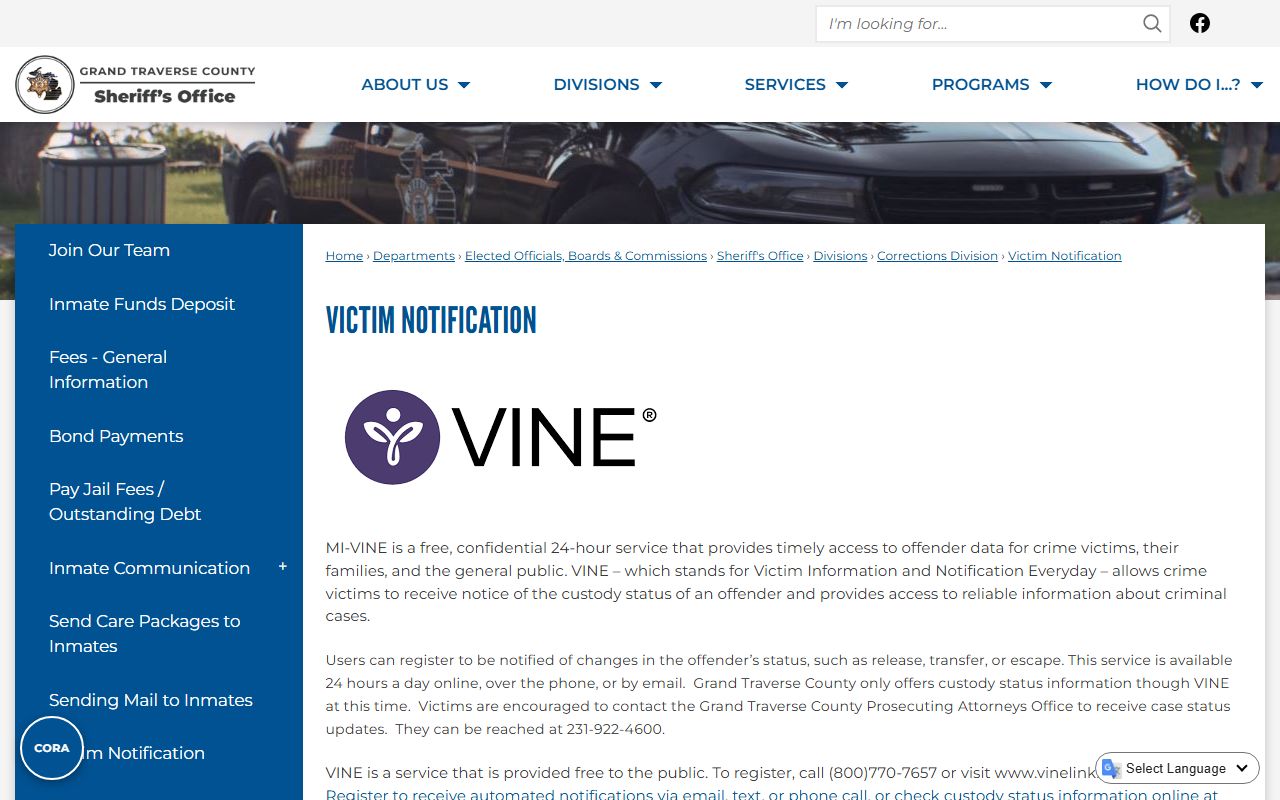
MI-VINE is free, confidential, and available around the clock, and it delivers custody and case status alerts that the static court record does not carry.
How to Search Grand Traverse County Criminal Court Records
Felony circuit-court cases are searched through the county's online criminal records portal. The same hub links a civil portal for civil and domestic cases. The criminal database covers felony offenses bound over to circuit court and leaves misdemeanors out. It may not show every case, because Public Act 193 of 2020 lets some qualifying records drop off public view.
- Open the county criminal records search from the Civil and Criminal Records Search hub.
- Enter a defendant last name, or a name with case year and case number.
- Choose Grand Traverse from the county dropdown, then submit the query.
- Open the matching case to read the header, charges, and register of actions.
- Request a certified copy from the records office if you need one for court.
The criminal portal uses a short, fixed set of fields. A partial last name works, but the first name must stay blank when you use one.
| Field Label | Type | Required | Options / Format Notes |
|---|---|---|---|
| Last Name | text | no | Partial last name allowed; if used, first name must be blank. |
| First Name | text | no | Leave blank when using a partial last name. |
| Case Year | text | no | ccyy format. |
| Case Number | text | no | Use with case year or name. |
| County | dropdown | yes | Select County, Antrim, Grand Traverse, Leelanau. |
| Submit | button | yes | Submits the search. |
District court criminal business runs on its own workflow, including a separate way to handle release money. The 86th District Court's district court bond payments page shows how bonds are posted for cases at that level.
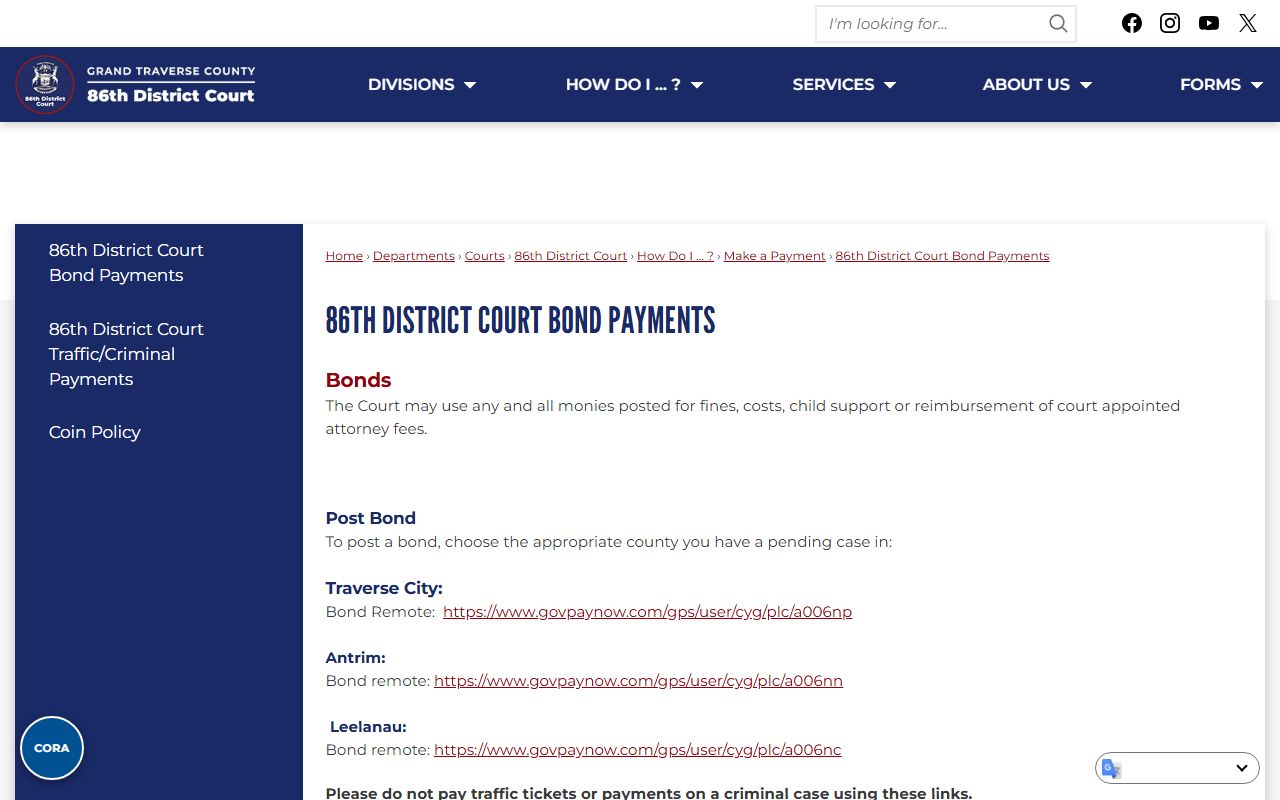
That split matters for a search, because the district court tracks its misdemeanor and bond activity apart from the circuit court's felony database. For a name-based history beyond one county, Michigan's ICHAT and State Police record checks are separate paid searches. If the online record is missing, the records office terminal, email, or phone line can confirm what the court holds.
Note: The criminal search returns felony circuit cases only, so a misdemeanor or a set-aside conviction may not appear even when a person has a record.
Stages of a Grand Traverse County Criminal Case
A felony case moves through fixed stages, and each one leaves a mark in the record. The file starts with a complaint and a bindover from district court, then reaches arraignment, pretrial and motions, a plea or trial, disposition, and sentencing. The docket lists these in date order, so the record reads as a timeline.
Case flow: Complaint & Bindover › Arraignment › Pretrial / Motions › Plea or Trial › Disposition › Sentencing
Bond is set early, often at or near arraignment, and the county posts a way to pay it online. The circuit court's bond payments page handles money that secures a defendant's release and appearance.
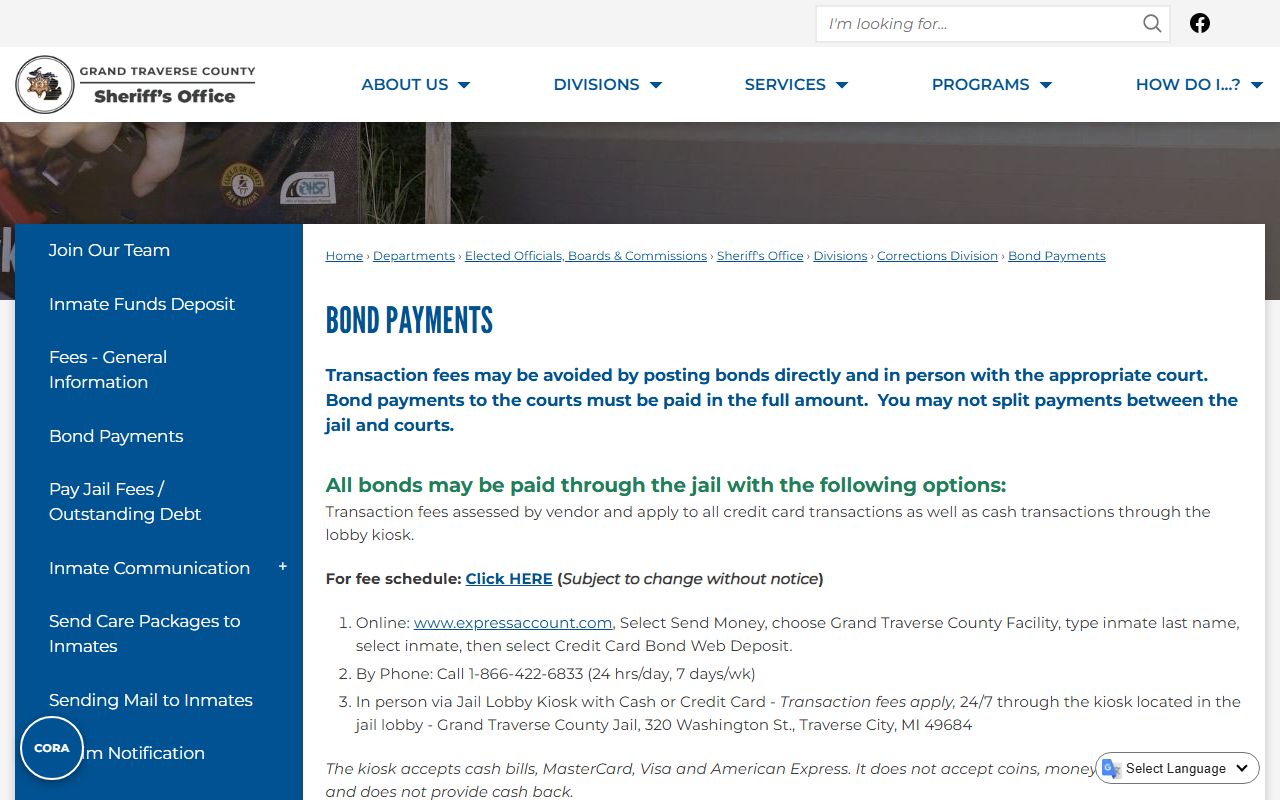
A posted or forfeited bond can show up in the docket, which ties the payment record back to the criminal case file.
| Stage | What Happens |
|---|---|
| Complaint & Bindover | District court finds probable cause and sends the felony up to circuit court. |
| Arraignment | Charges and rights are read, a plea is entered, and bond is set. |
| Pretrial / Motions | Lawyers exchange discovery, file motions, and try to resolve the case. |
| Plea or Trial | The defendant pleads, or a judge or jury decides guilt. |
| Sentencing | The court imposes the penalty after a plea or a conviction. |
Prosecutor and Defense in a Criminal Case
The prosecuting attorney decides what to charge and carries the case for the state. Noelle Moeggenberg serves as the county prosecuting attorney, with Kyle F. Attwood as chief assistant. The office files the charging document, handles pleas, and recommends a sentence. Its role runs across the docket, from the first count to the final judgment. Its work sits at the county Prosecuting Attorney office on Court Street in Traverse City.
A defendant who cannot afford a lawyer may receive court-appointed counsel. The county runs this through the Michigan Indigent Defense Commission system rather than a standalone public defender office. The 86th District Court explains how appointed lawyers are assigned on its court-appointed attorney information page.
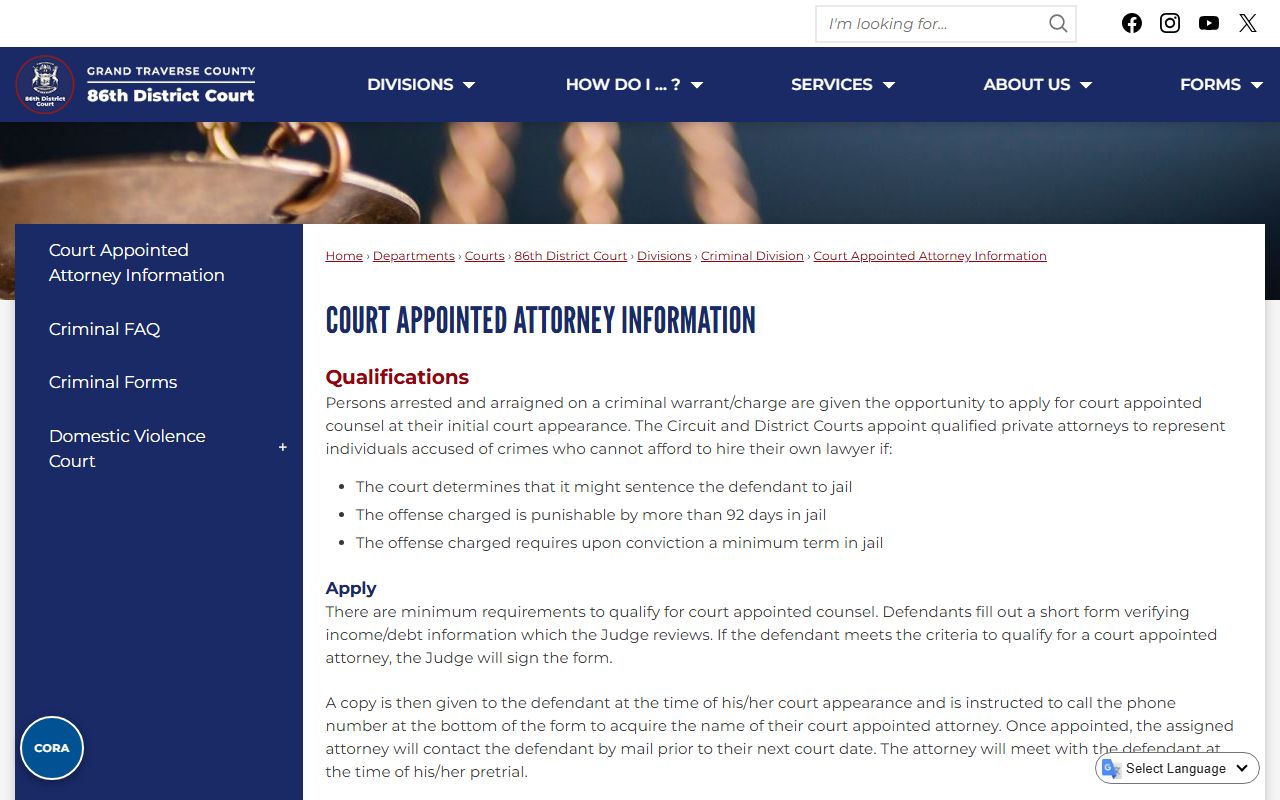
The defense attorney's name, and whether counsel was court appointed, are both fields the criminal record carries.
What a Grand Traverse County Criminal Court Record Shows
The criminal case file is built from set fields, and each one answers a piece of the story. The header identifies the case and the people in it. The offense section lists the charges and how they resolved. A proceedings table logs every action by date.
| Field | What It Shows |
|---|---|
| Case Number | The circuit-court case ID tied to the whole file. |
| Case Status | Whether the case is open or closed. |
| Defendant | Name and birthdate of the person charged. |
| Arraigned On | The date charges and rights were read. |
| Judge | The circuit judge assigned to the case. |
| Offense Date | When the alleged crime is said to have happened. |
| Complaint Number | The tracking number of the charging document. |
| Arresting Officer | The officer who made the arrest. |
| Defense Attorney | Counsel of record, and whether court appointed. |
| Prosecutor | The assistant prosecuting attorney on the case. |
| Plea | The defendant's response to each count. |
| Conviction | Whether each count ended in a finding of guilt. |
| Disposition | The final outcome, such as nolle prosequi or judgment. |
Note: The offense table lists each count on its own line with its plea, conviction, and description, so a single case can show several outcomes at once.
Reading Dispositions and Sentences
Disposition is the final word on a charge, and the record spells it out in short terms. A guilty plea, a jury verdict, a dismissal, or a nolle prosequi each closes a count in a different way. Sentencing then adds the penalty, whether jail, prison, probation, fines, or a delayed sentence.
Fines and costs from a conviction are paid through the court, and the 86th District Court posts a traffic and criminal payment option for balances at that level.
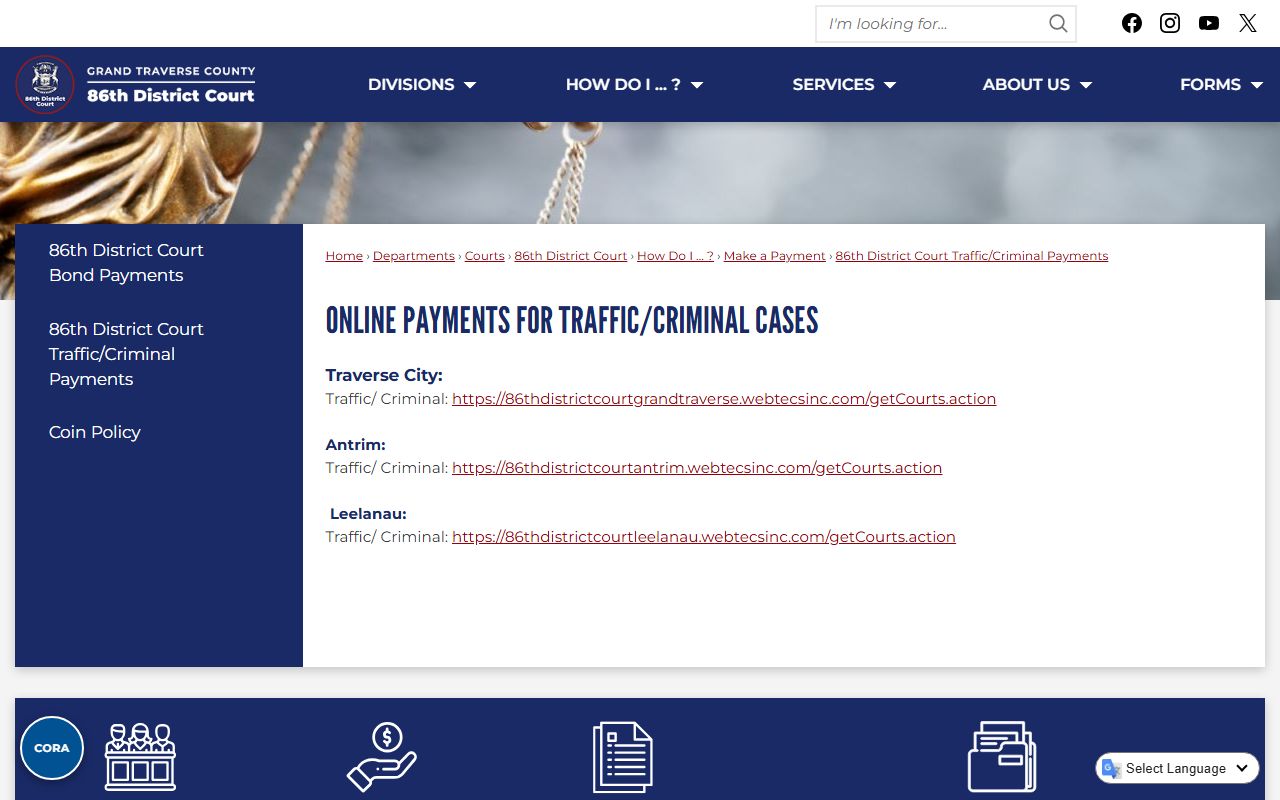
A paid or outstanding balance is part of how a district-court criminal case closes, which links the money trail back to the disposition.
- Guilty plea
- The defendant admits the charge and is convicted without a trial.
- No contest
- The defendant does not fight the charge and accepts the conviction.
- Nolle prosequi
- The prosecutor drops the charge and the count closes.
- Dismissed
- The court ends the charge, with or without the chance to refile.
- Charge reduction
- A charge is lowered to a lesser offense as part of a plea.
- Delayed sentence
- The court holds off on sentencing under set conditions.
Charges vs. Convictions
Being charged is not the same as being convicted. A criminal court record can list charges that were dropped, dismissed, reduced, or that ended in acquittal. A charge is only an accusation until a court resolves it. The charges themselves, from the complaint through any amendment, are covered in the Grand Traverse County arrest records and court charges.
| Charge | Conviction | |
|---|---|---|
| Stage | Accusation | Verdict or plea |
| Burden of Proof | Probable cause | Beyond a reasonable doubt |
| Can Change | Amended, reduced, or dropped | Set at the end of the case |
| Public Record | Yes | Yes |
Public Access to Criminal Court Records
Michigan starts from a presumption that court records are open. The Freedom of Information Act backs county-held records, and court rules back access to the case file itself. What a reader can actually see still depends on the case type, since some categories are shielded by law. Public rules for every record type sit in the wider Grand Traverse County court records.
Key Statutes:
Michigan MCL 15.235 - Sets how a FOIA request is made and what a public body may charge.
Michigan MCL 15.243 - Lists the exemptions that can keep parts of a record from release.
Michigan MCR 8.119 - Governs how Michigan courts maintain and share case files.
Sealed vs. Expunged Records
Some criminal records come off public view through Michigan's set-aside process. The state's Clean Slate law and Public Act 193 of 2020 can automatically set aside qualifying convictions. Once a conviction is set aside, it should stop showing in public-facing systems, though the underlying state record still exists under law.
| Sealed | Expunged | |
|---|---|---|
| Visibility | Hidden from public view | Set aside and treated as never entered |
| Law Enforcement | Limited access | Very limited access |
| Eligibility | Limited case types by court order | Qualifying convictions under Michigan set-aside law |
Michigan's automatic set-aside statute clears qualifying convictions without a filing, while the set-aside procedures statute sets the limits and steps for the rest.
Note: A set-aside conviction may still be checked through Michigan State Police record checks and ICHAT, so removal from the county search does not erase every trace.
Background Check Considerations
A casual name search is not the same as a background check. Employers, landlords, and licensing bodies that rely on criminal history must follow the federal Fair Credit Reporting Act. Official Michigan checks run through ICHAT and State Police fingerprint records, not a county case search.
Important: This site is a private resource and is not a consumer reporting agency under the FCRA, so its information cannot be used for employment, tenant, credit, or insurance screening.
Restricted Criminal Court Records in Grand Traverse County
Not every criminal-adjacent record is open. Juvenile cases sit in family court records with limited public access, and adoption files are closed entirely. Personal protection orders are pulled from the public online search and handled by the clerk. Mental-health commitment matters in probate are narrower still.
Juvenile defendants also have a right to counsel, and the 86th District Court lists how those lawyers are appointed on its court-appointed attorneys page.
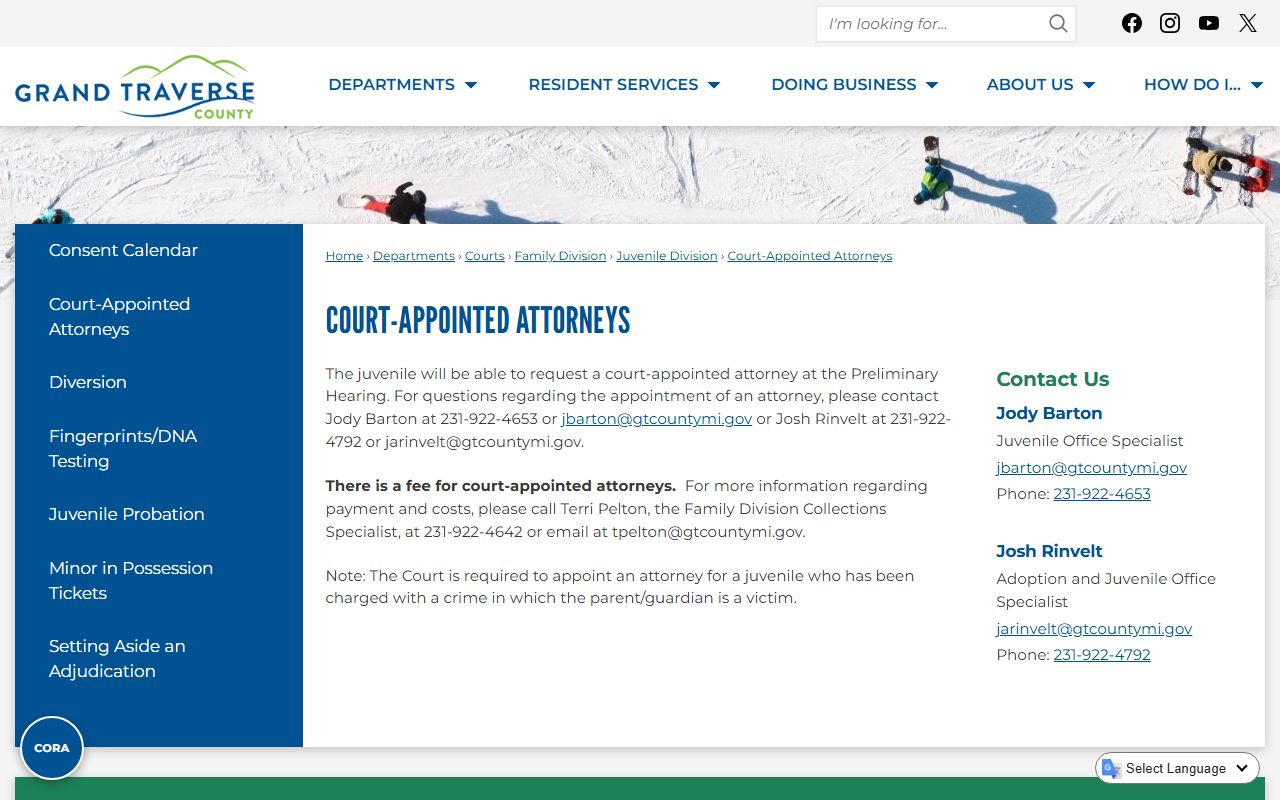
Because juvenile files are shielded, that appointment sits in a record the public generally cannot open the way it can an adult felony case.
Sealed and ongoing matters round out the restricted list. A judge can seal a file by order, and active cases may hold back some documents until the matter ends. For any protected category, the county's direct path is a call to the clerk or a formal records request.