
Getting a Marriage License in Grand Traverse County
A marriage license in Grand Traverse County comes from the County Clerk. Samuel Gedman holds that office, and his staff keeps the county's vital records. That means birth records, death records, and marriage licenses all run through the same clerk. The application can be filled out from any computer, so a couple starts the process before they ever set foot in the office. Details on the license process live on the county's Marriage Licenses page.
Both people apply together, and the couple provides identity and background information the state requires. A three-day waiting period follows the application. The license cannot be picked up until that window passes. Once issued, the license is only good for a short time. The ceremony has to happen within 33 days of the application, or the license becomes void and the couple starts over. The clerk who handles licenses also handles the county's court files, which are described further on the County Clerk page.
One local detail matters up front. Grand Traverse County is not performing weddings at this time. The clerk still issues the license, but the couple has to arrange an officiant on their own. The county's Marriage Information page confirms both points.
Note: The 33-day clock starts on the application date, not the pickup date, so a couple should plan the ceremony as soon as the license is in hand.
Michigan Residents Versus Out-of-State Applicants
Where a couple applies depends on where they live. Michigan residents apply in the county where either person is a resident. That license then works anywhere in the state. Out-of-state couples follow a different rule. They apply in the county where the wedding will take place, and the license is only valid in that county. The clerk asks out-of-state applicants to confirm the ceremony location before they apply.
| Question | Michigan Residents | Out-of-State Applicants |
|---|---|---|
| Where to apply | County where either person lives | County where the wedding is held |
| Where the license is valid | Anywhere in Michigan | Only in the issuing county |
| Extra step | Standard application | Confirm the ceremony site with the clerk |
How to Apply for a Marriage License
The application moves faster when both people gather their information first. Names, dates, and residence details all get entered, so having them ready avoids a second trip. The steps below follow the county's stated process.
- Confirm which county you apply in. Michigan residents use the county where either person lives, and out-of-state couples use the county of the ceremony.
- Complete the application from a computer. The county lets both applicants enter their information online before the clerk processes it.
- Provide the required identity and background details for both people, including full legal names, dates of birth, and residence.
- Pay the license fee to the County Clerk using an accepted method.
- Wait out the three-day period. The license is not ready until that window closes.
- Pick the license up on the scheduled day and hold the ceremony within 33 days.
Marriage License Application Fields
The online application collects the standard data points Michigan clerks record for a marriage license. Some entries are used to set the correct county, and others confirm each applicant is eligible to marry. The table lists the core fields a couple should expect to complete.
| Field | Required | Notes |
|---|---|---|
| Full Legal Name | Yes | Both applicants; the name used here is what a later copy request must match. |
| Date of Birth | Yes | Confirms each person meets Michigan age rules. |
| Birthplace | Yes | City and state, or country if born abroad. |
| Residence and County | Yes | Sets the venue; residents apply where either person lives. |
| Social Security Number | Yes | Michigan collects the SSN on the application unless a waiver applies. |
| Parents' Names and Birthplaces | Yes | Includes each parent's birth surname. |
| Prior Marriages | Yes | Number of prior marriages and how each one ended. |
Grand Traverse County Marriage License Pickup
The three-day wait is fixed, and the county spells out exactly when a license is ready. The pickup day depends on the day the application goes in. A couple who applies early in the week gets the license later that same week. Applications later in the week roll to the following Monday.
The schedule below comes straight from the county's stated pickup table. Planning the ceremony around these dates keeps the couple inside the 33-day limit.
| Application Submitted | License Ready |
|---|---|
| Monday | Thursday |
| Tuesday | Friday |
| Wednesday | Monday |
| Thursday | Monday |
| Friday | Monday |
Searching the Grand Traverse County Marriage Index
The county keeps a searchable marriage license index. It lists everyone who has applied for a marriage license in Grand Traverse County. Not every license on the list was actually used, so the index shows applications, not just completed marriages. The database is refreshed every night, which keeps recent entries current.
Copies of a marriage certificate follow a separate track. The county names OfficialRecordsOnline as the web portal for requesting copies, and the same request can go in by mail, through the online form, or in the after-hours drop box. The county's Online Records hub links the marriage index alongside the county's other free searches.
A mail request has to identify the record. The clerk asks for the names of the couple at the time of application, the date of marriage, a mailing address, and payment. Missing any of those slows the request down.
Note: The index updates nightly, so a marriage from the last day or two may not appear until the next refresh cycle runs.
Grand Traverse County Marriage and Divorce Fees
Marriage copies and court record copies carry different price tags because they come from different offices. A certified marriage certificate is priced per copy of the same record. Divorce records are court files, so they follow the clerk's court copy fee. The county accepts cash, check, money order, and credit or debit card for these requests.
| Item | Amount |
|---|---|
| Certified marriage certificate, first copy | $15 |
| Each additional marriage copy, same record | $5 |
| Certified court record copy (divorce decree) | $10 plus $1 per page |
| Plain copy at the public terminal | $0.50 per page |
| Recent register of actions | $3 |
| Register of actions from 1994 or earlier | $10 |
| Civil e-filing system fee (new civil cases) | $25 |
Finding Grand Traverse County Divorce Records
A divorce is a court case, so its record lives with the courts, not the vital records desk. In Grand Traverse County that means the circuit and family court records office. The office and its search tools are reached through the county's Civil and Criminal Records Search hub, and the broader court file system is covered on the court records page.
Where a divorce sits depends on one thing: minor children. A divorce with minor children is kept by family court records. A divorce without minor children is listed with circuit civil records. The civil search treats divorces, family support, and paternity as domestic relations cases, so all three share that side of the system.
The district court publishes a wide set of program and service pages that sit next to the family docket. The District Court Services page is a good window into that lineup.
The county's court files also reach beyond ordinary cases. The circuit court's Duck Lake Level Updates record shows the same civil records system carrying long-running local orders.
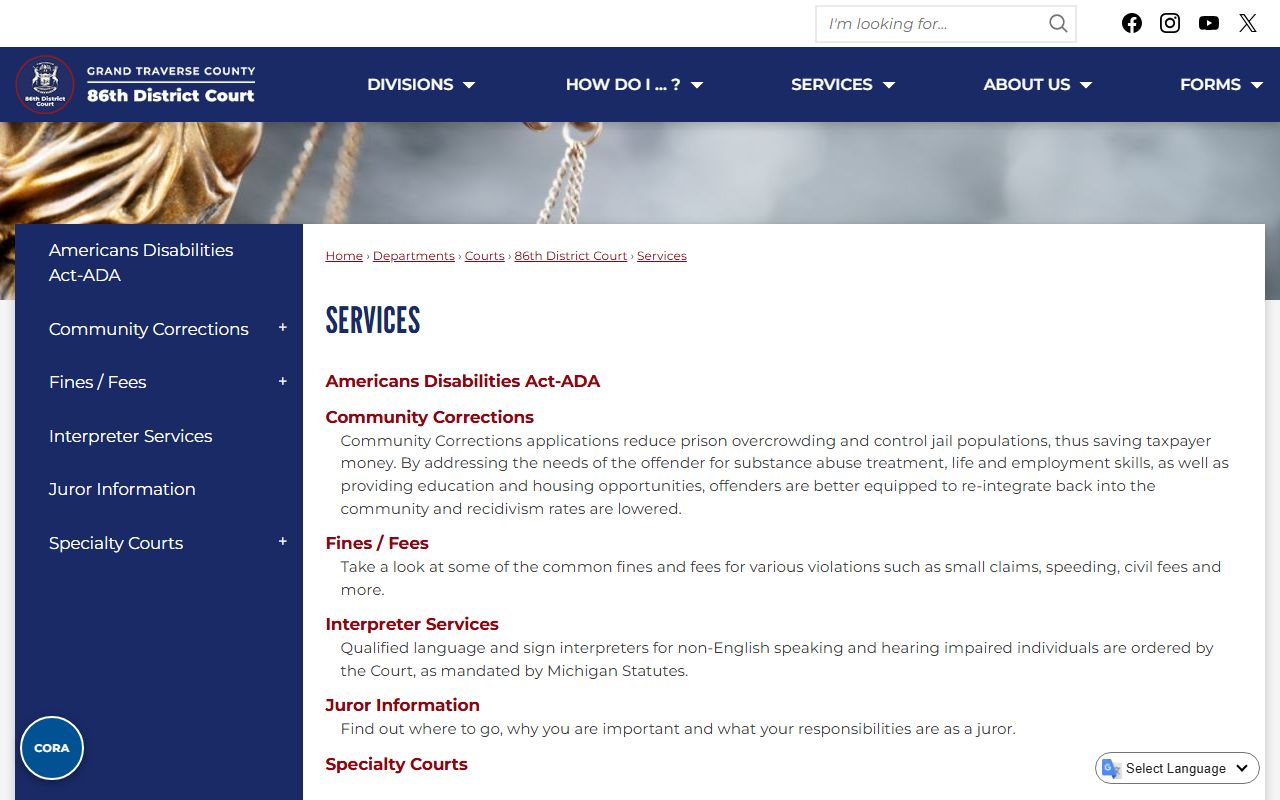
The services listing shows how family cases share space with the county's other district-court dockets, which helps explain why a divorce file can land in one records office rather than another. That split is the single most useful thing to know before searching.
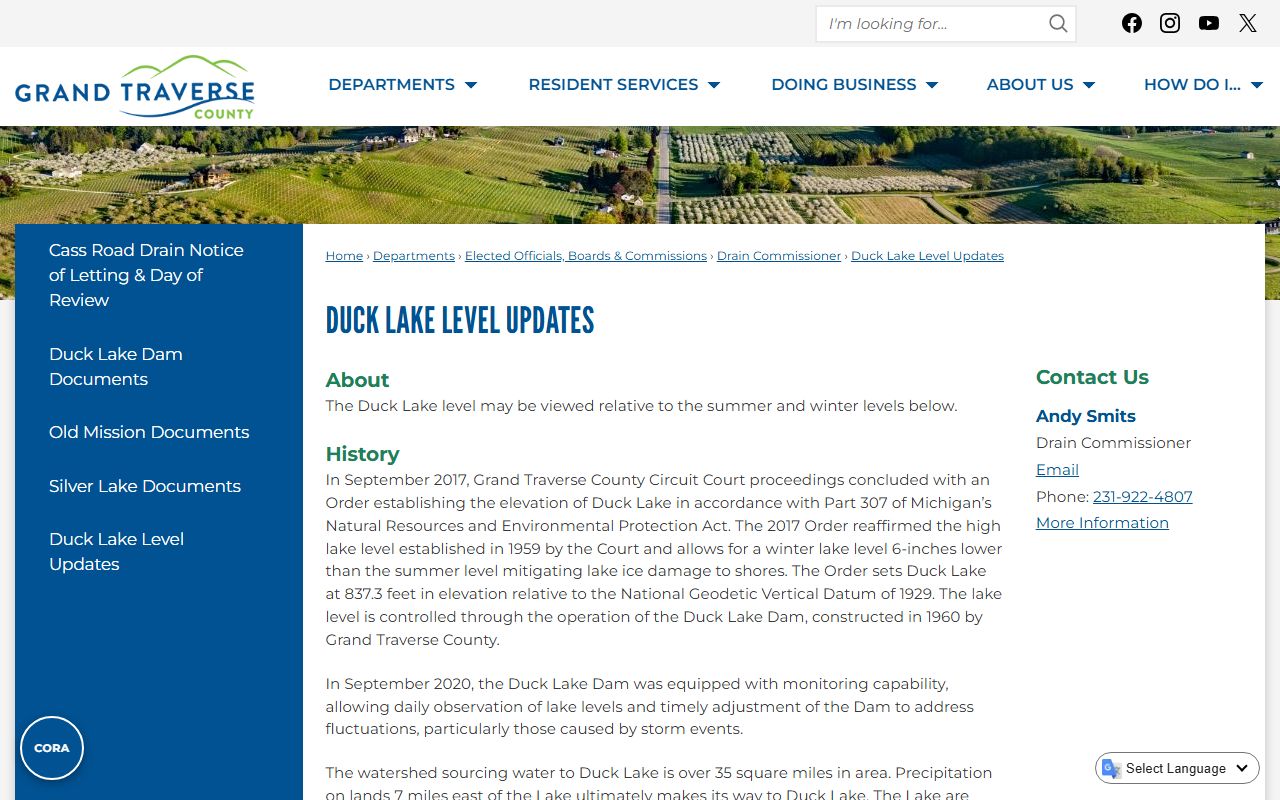
The Duck Lake order is a civil circuit matter, and it rides the same records system that stores divorce files without minor children. It is a reminder that circuit civil records hold far more than divorce decrees.
Family Division and Specialty Dockets in Grand Traverse County
Divorce with minor children runs through the family division, which sits inside the circuit court system. That same court system runs several treatment-focused dockets. A family going through divorce may cross paths with these programs when substance use or safety is part of the case. The county publishes each one in detail.
The Recovery Court is an intensive program for people dealing with alcohol and drug addiction, and the prosecutor's office takes an active part.
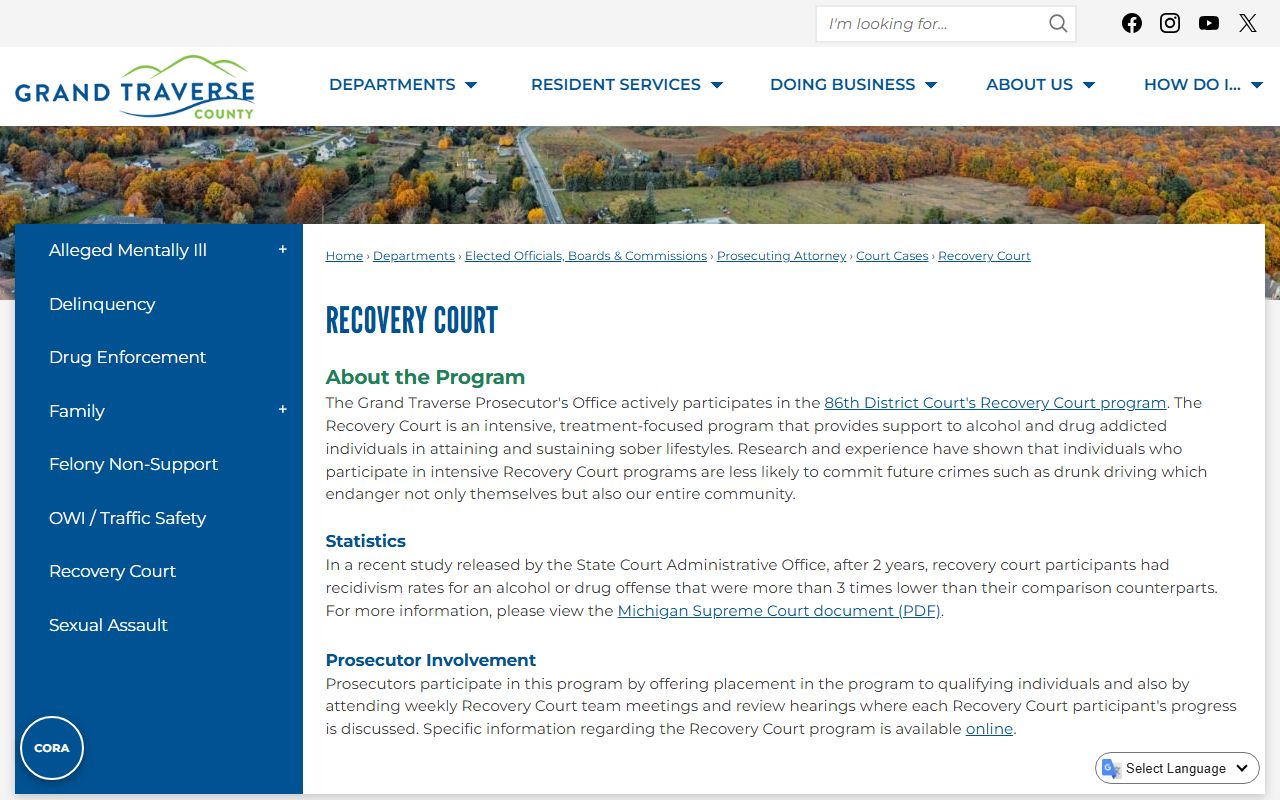
Recovery court outcomes can shape a family case, since sobriety and treatment progress often matter in custody and parenting decisions. The docket runs on a team model built around the judge, counsel, treatment providers, and the participant.
The county also runs a Drug Court, which publishes its own handbook and program pages.
Drug court files are part of the same court structure that holds divorce and family records, so a person tracking a case may see these dockets referenced in the wider system. Each program has its own eligibility rules and paperwork.
Getting Certified Copies of Grand Traverse County Records
Certified copies carry the clerk's seal, and they are what most agencies accept for legal proof. A plain printout from the index does not carry that weight. For a marriage certificate, the request goes to the County Clerk by mail, online form, or drop box, and the OfficialRecordsOnline portal handles web requests.
For a divorce decree, the copy comes from the court records office because a divorce is a court file. The county's Records Request process lays out the mail and email steps, and the certified court copy fee applies. A mail request for a court copy needs the party names, the case number, the date and title of the documents, a mailing address, and payment.
Email requests work a little differently. The office responds first, and the credit card payment is completed after that reply. The details for a marriage copy are on the Certified Copies page.
History of Marriage and Court Records in Grand Traverse County
Grand Traverse County has kept records since the 1850s, and the county's court files reach back well over a century. The circuit records office holds documents dating to April 26, 1859. That long span is part of why some older material sits on microfilm rather than in the online index.
The county's parks and land history sits alongside that recordkeeping story. The Park History page traces how public spaces around Traverse City took shape over the same decades.
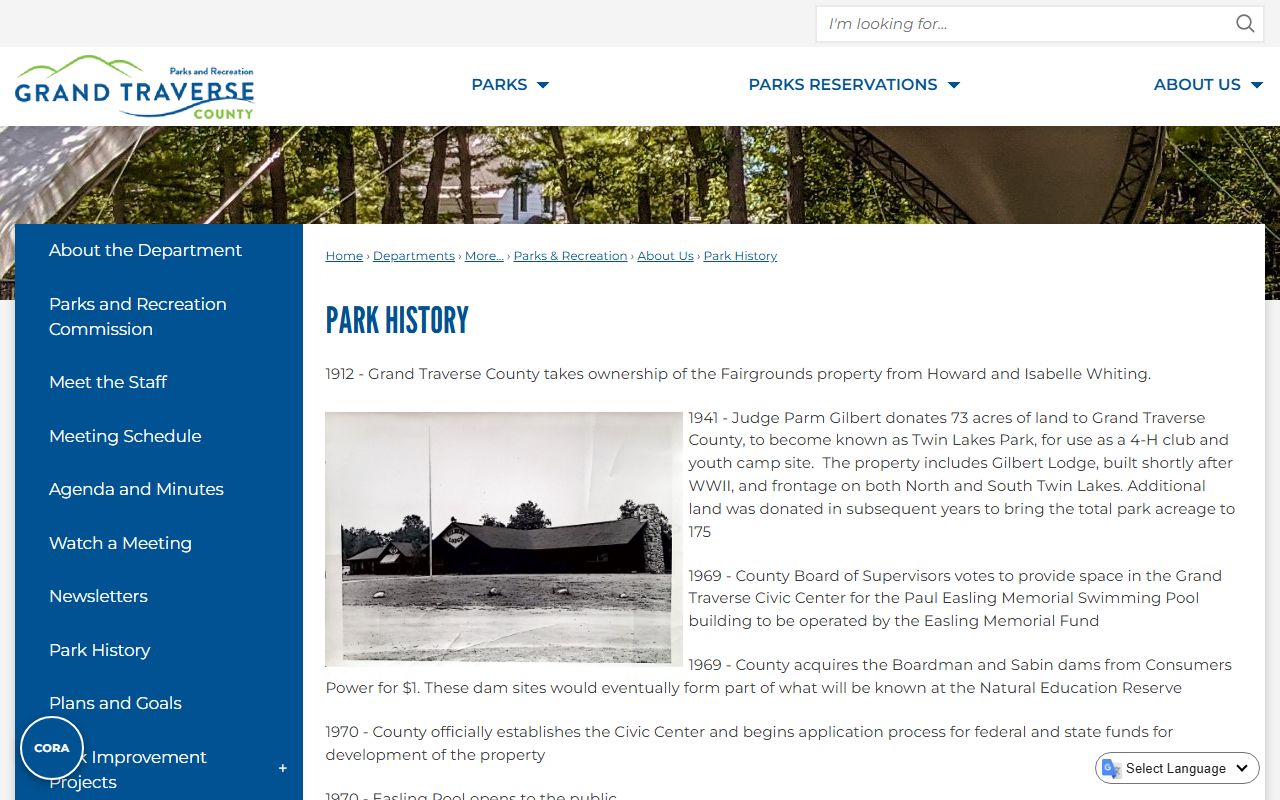
That local history frames the downtown Traverse City corridor where the clerk and the courts still process marriage and divorce records today. The offices grew up with the community they serve.
The county also keeps a photo record of its older courthouses. The Historic Photos collection shows several courthouse eras, from summer and winter views to the Antrim and Leelanau buildings.
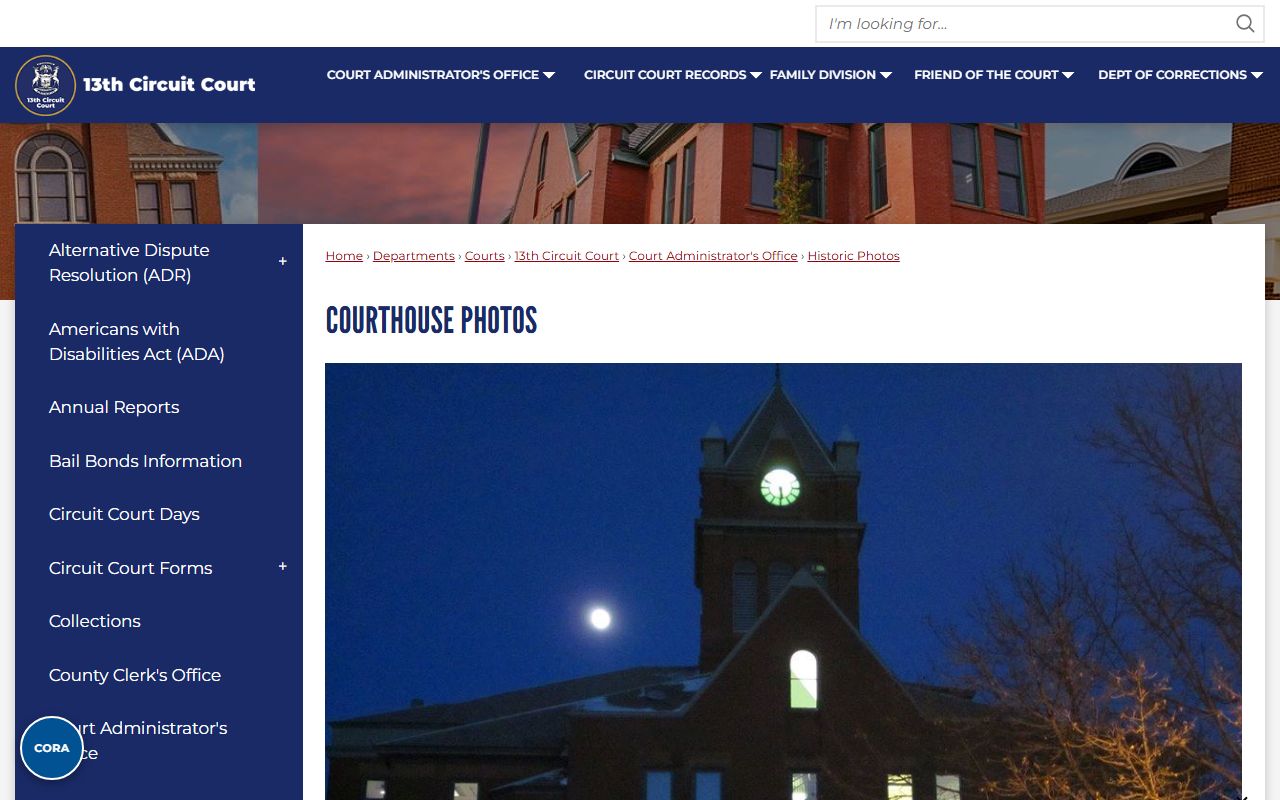
Those images show that the county has moved through several courthouse buildings, not one static site. The records themselves carried forward through each of those moves.
Michigan Vital Records and Statewide Resources
Some requests reach past the county. The State of Michigan keeps a central vital records office for statewide certified copies of marriage and other life-event records. It is run by the Michigan Department of Health and Human Services, and it is the fallback when a record is not at the county or when support forms are needed for a domestic case.
Michigan Vital Records (MDHHS)
Division of Vital Records and Health Statistics
Statewide birth, death, and marriage certificate copies
For a Grand Traverse County marriage or divorce record, the county office is almost always the faster path, and the state office is the backstop. Support and domestic-relations forms are handled through the state court and vital-records resources.