
How to Look Up a Grand Traverse County Traffic Ticket
The county does not publish a single public traffic-citation search form. Instead, the court's own ticket and payment tools act as the lookup. The clearest starting point is the ticket itself, which lists the court address, the offense, and the amount owed. From there, a driver can pay, ask for a hearing, or request a copy of the case file.
Because there is no one search box, it helps to know every channel that resolves or reveals a ticket. The table below lists the practical ways to look up and handle a Grand Traverse County traffic citation.
| Channel | How | Notes |
|---|---|---|
| Pay online | Use the 86th District Court traffic and criminal payment portal, open 24 hours a day, with a credit card | Fastest way to close a listed civil infraction |
| Pay by mail | Sign the back of the ticket, enclose a check or money order payable to the 86th District Court, and mail it to the court address on the front of the ticket | Payment must reach the court within 10 calendar days |
| Drop box | Leave payment in the box in front of the Robert P. Griffin Hall of Justice at 280 Washington Street, Traverse City | No online account is needed |
| Call the court | Grand Traverse 231-922-4580, Antrim 231-533-6441, Leelanau 231-256-8250 | For case status, hearing requests, or amounts not printed on the envelope |
| Records request | Visit the district court counter or file a county records request for a certified copy | Best route for older files or court-certified copies |
The county's Traffic Division page is the anchor for all of these steps, and it points citation holders to the right county line based on where the ticket was written.
Which Court Handles Grand Traverse County Traffic Cases
Every traffic ticket in the area is processed by the 86th District Court, which covers three counties: Grand Traverse, Antrim, and Leelanau. A civil infraction is handled by the traffic division in the county where the citation was written, so the county on the ticket decides the phone line and the venue. The circuit court does not hear routine traffic matters.
Each county in the district has its own traffic contact. Use the line that matches the county printed on the citation.
86th District Court, Grand Traverse
Robert P. Griffin Hall of Justice
280 Washington Street
Traverse City, MI 49684
231-922-4580
86th District Court, Antrim
Traffic questions
231-533-6441
86th District Court, Leelanau
8527 E. Government Center Drive
Suttons Bay, MI 49682
231-256-8250
The 86th District Court page confirms the three-county reach and links each county's traffic tools. A ticket written in Grand Traverse is answered in Traverse City, not in a neighboring county seat.
Types of Grand Traverse County Traffic Cases
Most traffic matters are civil infractions, which are not crimes and carry a fine rather than jail. A smaller group are misdemeanors, which move to the district court criminal division and can bring jail, probation, or a larger fine. The record you find depends on which track the ticket takes.
- Moving violations - Speeding, failure to stop, and similar civil infractions that carry a fine and often points.
- Equipment and waivable tickets - Fix-it items that an officer can sign off, then return within 10 days.
- No-fault and insurance tickets - Proof-of-insurance citations that drop sharply if valid proof is shown in time.
- Traffic misdemeanors - Charges such as driving on a suspended license that route to the criminal division.
- Commercial and CDL violations - Truck and bus offenses that follow stricter federal reporting rules.
When a ticket rises to a misdemeanor, the county prosecutor steps in to charge and resolve the case. The county's Prosecuting Attorney office, led by Noelle Moeggenberg, handles the criminal side of traffic matters alongside other offenses.
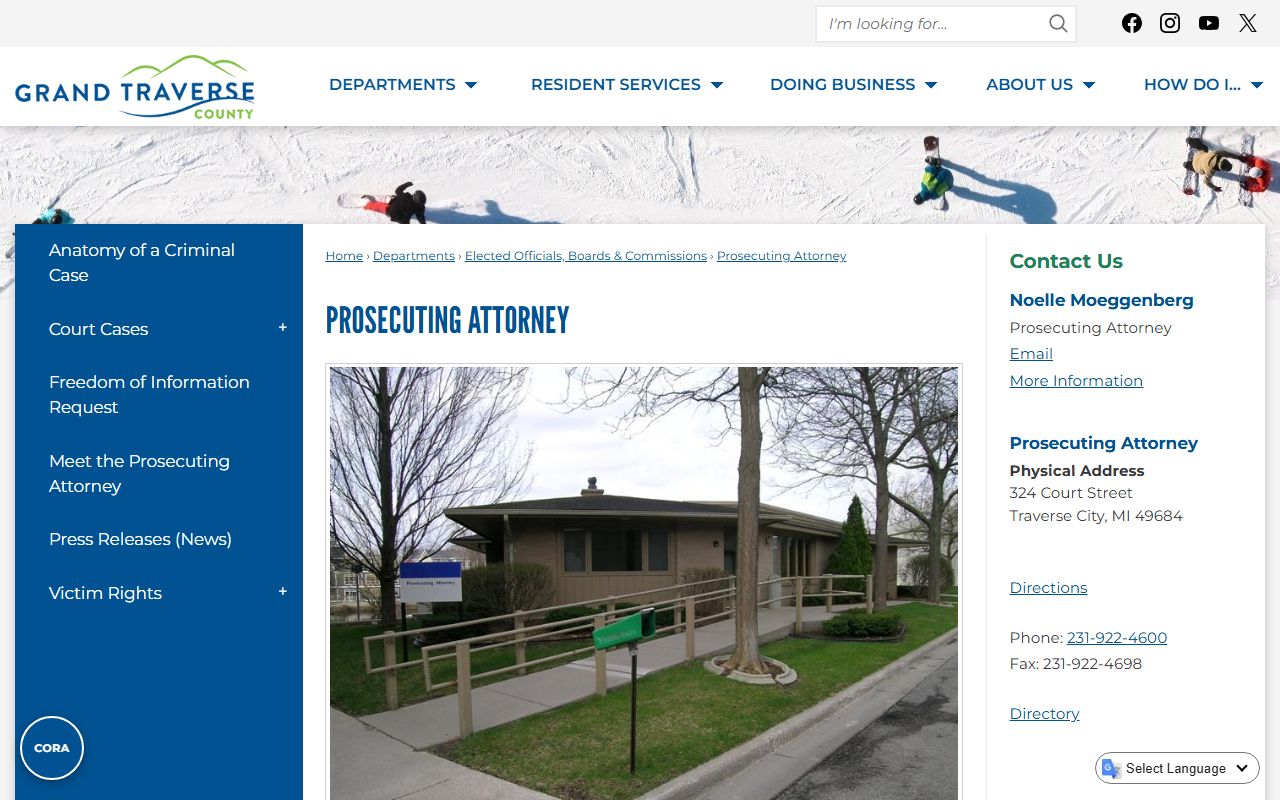
That office decides whether a serious traffic charge is filed as a misdemeanor, which is why the same driver can face both a civil ticket and a criminal count.
Speeding Fines and Points in Grand Traverse County
Speeding fines rise in steps based on how far over the limit a driver was clocked. Points are set by state law and are tied to the offense, not to the county. The schedule below reflects the amounts the court posts for common speeding tiers.
| Speed Over Limit | Fine and Costs | Points |
|---|---|---|
| 1 to 5 mph over | $120 | 2 points |
| 6 to 10 mph over | $130 | 2 points |
| 11 to 15 mph over | $150 | 3 points |
| 16 to 20 mph over | $180 | 4 points |
| 21 to 25 mph over | $205 | 4 points |
| 26 mph or more over | See the magistrate | 4 points |
No-fault and proof-of-insurance tickets follow a different rule. A driver who shows valid proof within 10 days can settle for $25. Without that proof, the county page says the court amount can climb to about $180 plus a state driver-responsibility fee. The county's Speeding and Other Traffic Violations page carries the full posted schedule.
Note: Points appear on the state driving record kept by the Secretary of State, so paying a speeding fine does not erase the points tied to it.
Paying or Contesting a Grand Traverse County Traffic Ticket
A driver has 10 calendar days to answer a Grand Traverse County traffic ticket. That answer can be a payment, a written response, or a phone call to request a hearing. Doing nothing is the one choice that always makes things worse.
- Read the back of the ticket and the fines-and-costs envelope to find the offense and the amount.
- If the offense is listed and you accept it, sign the back of the ticket.
- To pay, mail a check or money order payable to the 86th District Court, use the drop box at 280 Washington Street, or pay by card online 24 hours a day.
- To contest, call the correct county line and ask for an informal or formal hearing before the deadline.
- Keep proof of payment or your hearing date, since a partial payment does not stop a suspension if the balance is unpaid by the deadline.
Contesting a ticket does not require a lawyer, but a jailable traffic misdemeanor can bring the right to appointed counsel. The county's Michigan Indigent Defense Commission page explains how court-appointed attorneys are assigned for qualifying cases in the three-county district.
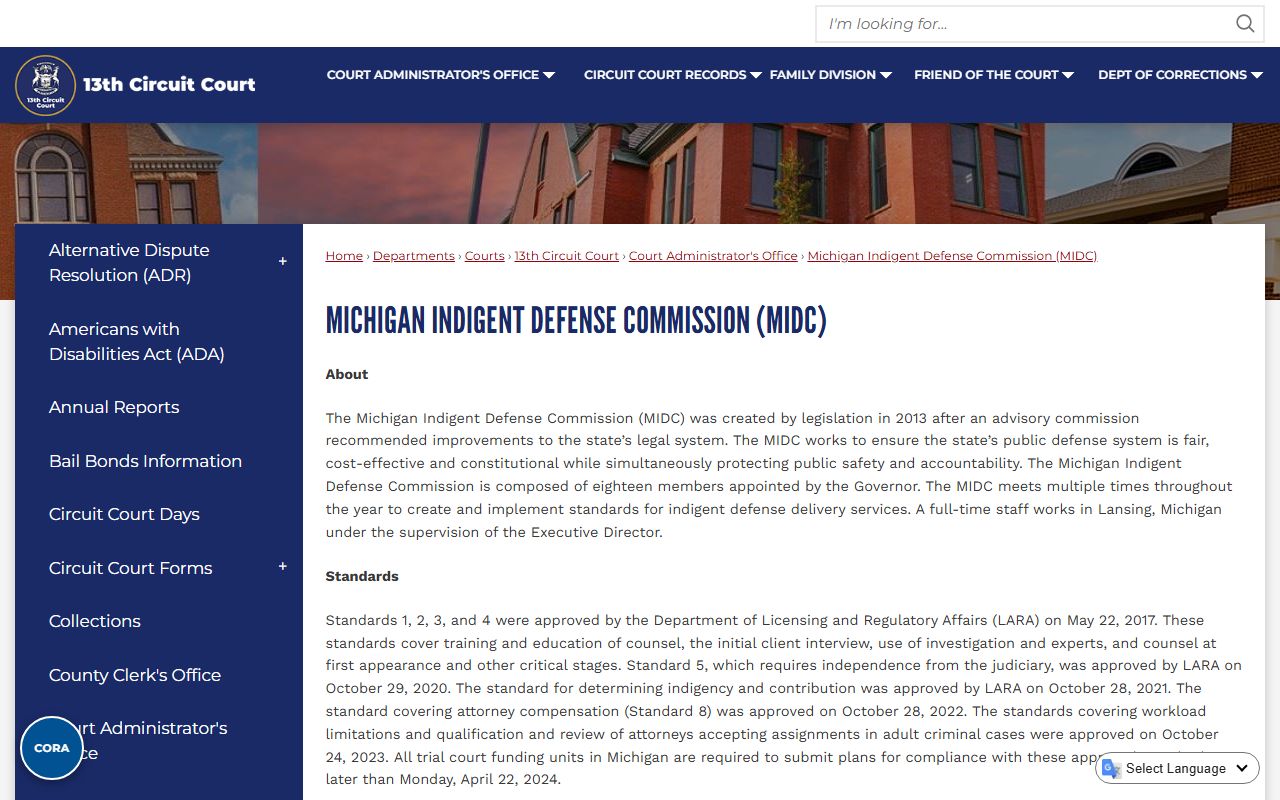
That path only matters for the small share of traffic cases that carry possible jail, since ordinary civil infractions do not.
What Grand Traverse County Traffic Court Records Show
A traffic court record is the district court's case file for one citation. It tracks the charge from the day it was written to the day it closed. The fields below are the ones a driver most often needs to read.
| Field | What It Shows |
|---|---|
| Citation Number | The ticket number the officer wrote, and the fastest key to the case |
| Driver / Defendant | The name and identifiers of the cited driver |
| Charge / Violation | The civil infraction or misdemeanor, with the statute or local code |
| Court Date | Any scheduled hearing or the response deadline |
| Plea / Response | Admit, admit with explanation, or deny responsibility |
| Disposition | The final outcome, such as responsible, paid, or dismissed |
| Fine and Costs | The dollar amount owed on the ticket |
| Points | Whether the offense carries points, which the Secretary of State assesses |
These fields mirror the wider case data the county keeps, and the same charge, plea, and disposition structure appears across the Grand Traverse County court records. A closed traffic case shows the disposition and a zero balance once the fine is paid.
Grand Traverse County Traffic Hearing Options
Grand Traverse County drivers have set ways to answer a ticket, and each one leads to a different result. Two of them settle the case without a fight, and one asks the court to decide. Picking the right response depends on whether you accept the ticket.
- Admit responsibility
- You accept the ticket and pay the fine, and the case closes.
- Admit with explanation
- You accept the ticket but ask the court to consider your reasons, which can affect the amount.
- Deny responsibility
- You dispute the ticket and ask for a hearing to test it.
- Informal hearing
- A magistrate hears the case without lawyers, with you and the officer present.
- Formal hearing
- A district judge hears the case, and lawyers may take part.
The district court's criminal division runs specialty dockets that sit alongside routine traffic work. The county's Domestic Violence Court, led by Judge Robert A. Cooney, is one such problem-solving docket for related misdemeanor cases.
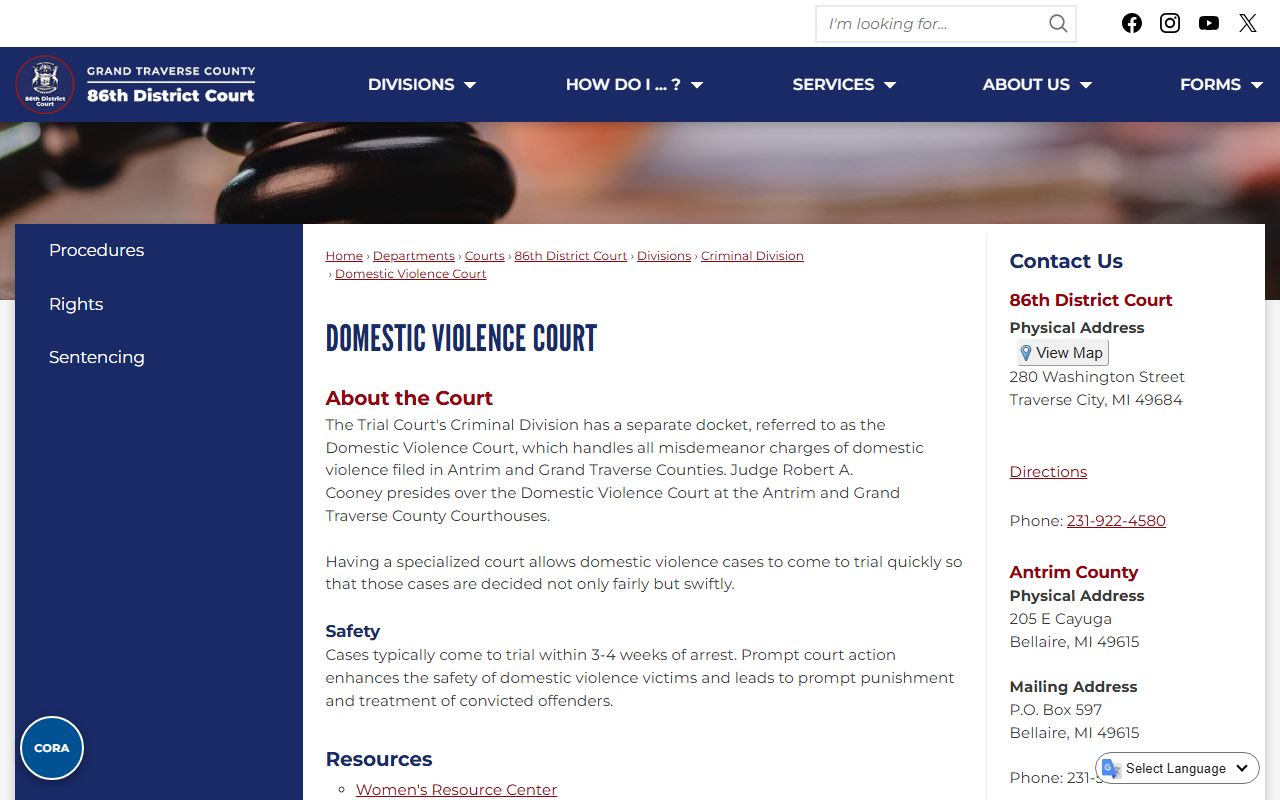
Those dockets show that the same court handling a speeding ticket also runs focused programs for higher-stakes cases.
Default, Late Fees, and License Suspension
Missing the 10-day deadline puts a ticket into default, and the costs grow from there. A default can also trigger an arrest warrant and a driving suspension through the Secretary of State. The fees stack in a set order.
What a missed deadline adds:
An extra $25 fee is added for failure to respond.
Late fees are added after 56 days.
Once the license is suspended, a $45 reinstatement fee is added.
A partial payment is allowed, but it does not stop a suspension if the full balance is not paid before the deadline. The fastest way to clear a default is to pay in full or to contact the court and set a new hearing. The longer a ticket sits, the more it costs and the harder the license is to restore.
Court Traffic Records vs State Driver Records
The court file and the driving record are two different files kept by two different offices. The 86th District Court holds the case record for the ticket. The Secretary of State holds the master driving record that shows convictions, points, and license status. Confusing the two is the most common traffic-record mistake.
| Point of Comparison | Court Traffic Record | State Driver Record |
|---|---|---|
| Record source | 86th District Court case file | Michigan Secretary of State master driving record |
| What is in it | Citation, charge, plea, court dates, disposition, and fine | Convictions, points, license status, and suspensions |
| Where to access | District court counter, phone, or a county records request | Michigan Secretary of State driver-record channels |
| How to correct errors | Contact the district court that entered the case | Contact the Secretary of State that holds the driving record |
An error on one file does not fix the other. If a case was dismissed but points still show, the court record and the driving record each need a separate check. Points are reported by the Secretary of State, so the court cannot remove them from the driving record.
Public Access Laws for Traffic Court Records
Michigan starts from a presumption that court records are open to the public. The Freedom of Information Act backs county-held records, and the court rules back access to the case file itself. A traffic case file is public, though personal identifiers can be limited.
Key Statutes:
Michigan MCL 15.235 - Sets how a FOIA request is made and what a public body may charge.
Michigan MCL 15.243 - Lists the exemptions that can keep parts of a record from release.
Michigan MCR 8.119 - Governs how Michigan courts maintain and share case files.
When a record is not online, the county's Records Request process is the fallback for a certified or full copy. That path works for older traffic files that the public counter no longer displays.
Grand Traverse County DUI and Sobriety Court
A drunk or drugged driving charge is not a routine traffic ticket. It is a crime, so it moves out of the traffic track and into the district court criminal division and, for felonies, the circuit court. A DUI case carries the full weight of a criminal file, including arraignment, plea, and sentencing.
Because these charges are criminal, the county prosecutor handles them from the first filing. The office's Meet the Prosecuting Attorney page describes the team that pursues impaired-driving and other criminal cases across the district.
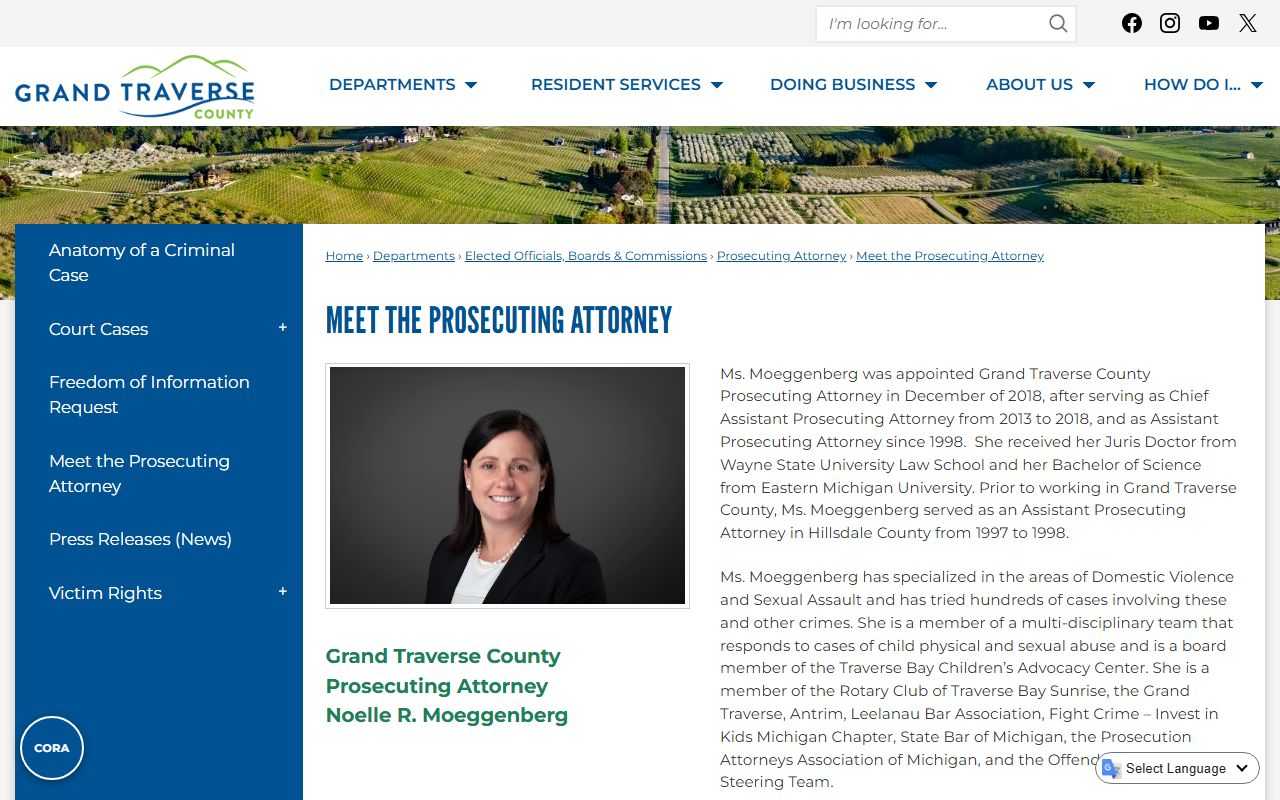
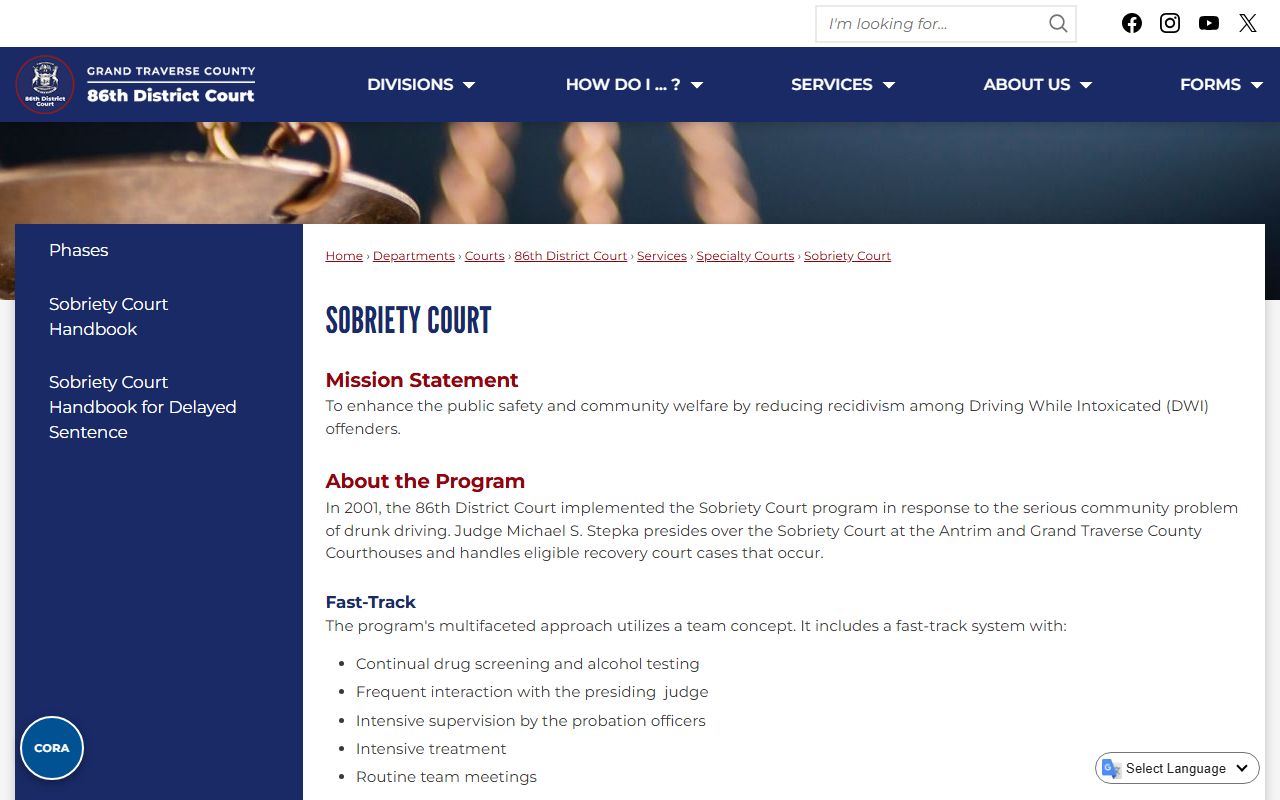
For repeat impaired-driving cases, the county runs a Sobriety Court that stresses treatment over jail. The Sobriety Court, started in 2001 and led by Judge Michael S. Stepka, uses a team of the judge, prosecutor, defense counsel, probation, and treatment providers.
Full case detail for a DUI charge, from arraignment to sentence, lives in the Grand Traverse County criminal court records rather than in a traffic file.
Deferred Options and Diversion Programs
Not every driver who admits a ticket pays it the same way. Admitting responsibility with an explanation lets the magistrate weigh the reasons and, in some cases, adjust the amount. For criminal-level cases, the district court also runs diversion and treatment dockets that can shape the outcome.
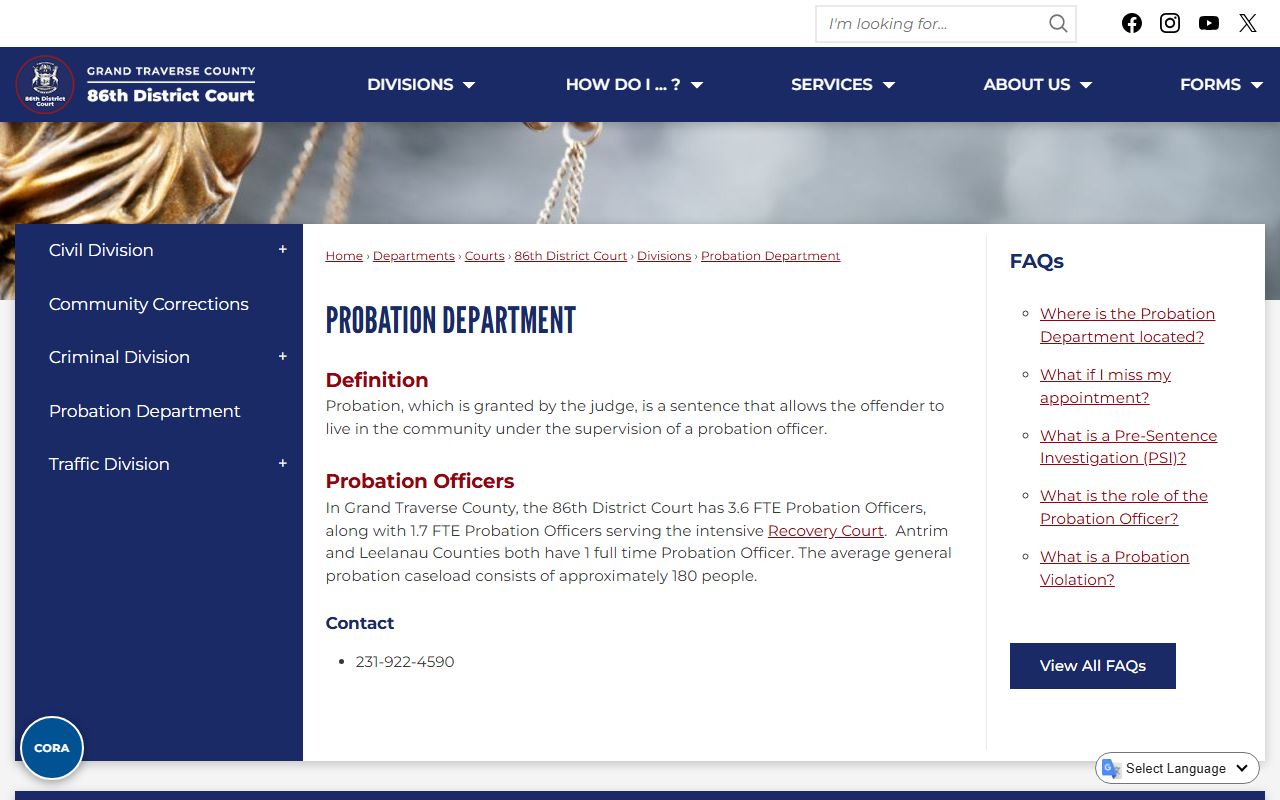
Probation supervision often follows a treatment docket or a jailable traffic conviction. The county's Probation Department monitors compliance, drug testing, and court conditions for those cases.
Alongside probation, the court lists a Community Outreach Court and an Eviction Diversion program among its problem-solving services. The Recovery Court offers an intensive treatment track for drug and alcohol cases tied to the criminal docket.
Sealing or Expunging Grand Traverse County Traffic Records
Civil infractions are not crimes, so they are not set aside the way a conviction is. A traffic misdemeanor, though, may qualify for a set-aside under Michigan law. The first step is to confirm the conviction status through a state record check.
Michigan's clean-slate framework lets some convictions be set aside, either by petition or automatically. The set-aside rules and limits sit in MCL 780.623, and the automatic set-aside statute is MCL 780.621g. A set-aside can stop a conviction from showing in public systems, but the underlying state record still exists under law.
Note: A set-aside deals with a criminal conviction, so a plain speeding civil infraction cannot be expunged and instead simply ages off the driving record over time.
Fees for Copies of Grand Traverse County Traffic Records
A driver who needs a copy of a traffic case file pays the court's standard record fees. A plain copy is cheap, while a certified copy carries a base charge plus a per-page rate. Certified copies are the ones courts and agencies accept as official.
| Item | Amount |
|---|---|
| Certified court copy | $10 plus $1 per page |
| Plain copy at a public terminal | $0.50 per page |
| Recent register of actions | $3 |
| Register of actions from 1994 or earlier | $10 |
These fees cover the court file only. A copy of the state driving record, with its points and license status, is ordered separately from the Secretary of State and is not part of the district court's fee schedule.