
What Is a Grand Traverse County Court Docket
A docket is the court's official timeline for a single case. Each line is one event. The clerk adds a new entry every time a document is filed, a hearing is set, or a judge signs an order. Read from top to bottom, the docket tells the whole story of a case without pulling the paper file. It shows what happened, when it happened, and who acted.
In Grand Traverse County the docket appears as a Court proceedings table inside each online case record. That table has three columns: Date, Action, and Proceeding. Every filing, notice, and ruling gets its own row. A civil docket runs from the complaint through the final judgment. A criminal docket runs from the bindover or arraignment through the plea and disposition.
The docket is not the full case record. It is a map of the file, not the file itself. A docket entry might read "motion for summary disposition," but the motion itself, with its arguments and exhibits, sits in the case folder held by the county clerk. The docket points to the document. The record contains it. That difference matters when you need a copy for a legal purpose rather than a quick status check.
How to Find Grand Traverse County Dockets Online
The county keeps two public case-search portals, one civil and one criminal, both reached from the Civil and Criminal Records Search hub. The civil records portal covers 13th Circuit Court civil cases, with case detail and register of actions for 1986 to present and index-only coverage for 1967 through 1985. The criminal records portal covers felony cases bound over to circuit court. Misdemeanors are not in it. Both databases update nightly.
- Open the civil or criminal records portal from the county search hub, based on the case type you need.
- Pick the county in the dropdown, which lists Grand Traverse along with Antrim and Leelanau.
- Enter a last name or a case number, then click Submit Query. A partial last name works if the first name is left blank.
- Open the case, then scroll to the Court proceedings table to read the docket entries by date.
For live hearing timing rather than a case index, use the Court Calendar page. It links to statewide Michigan court-display calendars for the district judges across all three counties in the district. The 86th District Court handles traffic and misdemeanor matters through its own workflow, so some of those events surface on the calendar tools rather than in the circuit portals.
Note: The criminal portal may not show every case because Michigan clean-slate rules remove some records, so a missing result does not always mean no case exists.
Sample Grand Traverse County Docket Entry
Each docket row is short by design. The Court proceedings table uses only three fields, but a single row carries a lot of meaning once you know how to read it. The date fixes the event in time. The action names the type of event. The proceeding describes what was filed or ordered. Together they let you follow a case at a glance.
| Field | What It Shows |
|---|---|
| Date | The day the clerk recorded the event, which sets the order of the docket. |
| Action | The event category, such as a filing, a hearing, an order, or a notice. |
| Proceeding | The plain description of the entry, such as complaint, answer, motion, or judgment. |
| Case header | Above the table, the case number, judge, party names, and disposition frame the whole docket. |
The header sitting above the proceedings table adds context the rows leave out. Civil headers list the case type, the judge, the parties, and the disposition. Criminal headers add the arraignment date, the offense, the plea, the conviction, and whether the defendant was incarcerated. Reading the header first, then the rows, is the quickest way to understand a Grand Traverse County docket.
Courts That Publish Dockets in Grand Traverse County
Docket coverage in the county follows the trial-court structure. Not every court posts a full online docket, and the ones that do split the work by case type. Michigan runs a circuit court for major matters, a district court for lower-level matters, and a separate probate court for estates and guardianships. Each keeps its own docket in its own system.
- 13th Circuit Court publishes civil dockets in the civil portal and felony dockets in the criminal portal, both through the county clerk's records office.
- 86th District Court handles traffic, civil infractions, and misdemeanor dockets through its own case and payment workflow, with hearing timing shown on the calendar tools.
- Probate Court keeps dockets for wills, estates, guardianships, and conservatorships, which are the least digitized of the core court categories and often need office contact.
The 86th District Court is a three-county operation, not a single building. It sits over Grand Traverse, Antrim, and Leelanau, with a separate venue in Suttons Bay for Leelanau matters. That regional reach is why the district docket shows up mostly through the shared court-display calendars rather than one local index. Family Division matters run inside the circuit-court ecosystem, and some of those, such as personal protection orders, are kept off the public civil site and must be handled by phone with the clerk.
Grand Traverse County Docket Entry Types
Most docket entries fall into a handful of recognizable types. Civil cases and criminal cases share some, such as motions and orders, but each track has its own signature entries. The list below draws from the actual civil and criminal dockets observed in the county's online records. Knowing the stage each entry belongs to helps you place any single row inside the larger case flow.
| Docket Entry | Track | What It Means |
|---|---|---|
| Complaint | Civil | The filing that opens a civil case and states the claim. |
| Summons issued | Civil | The court's notice ordering the defendant to respond. |
| Answer to complaint | Civil | The defendant's formal reply to the claim. |
| Scheduling conference order | Civil | Sets deadlines and the case timeline. |
| Motion for summary disposition | Civil | A request to decide the case or an issue without trial. |
| Order / Judgment | Civil | The judge's ruling or the final decision in the case. |
| Claim of appeal / remand | Civil | A challenge to a ruling or a case sent back to a lower court. |
| Certificate of satisfied judgment | Civil | Confirms a money judgment has been paid. |
| Bindover from district court | Criminal | Transfers a felony from district court to circuit court. |
| Arraignment held | Criminal | First appearance where charges and rights are read. |
| Not guilty plea | Criminal | The defendant's response denying the charge. |
| Felony information | Criminal | The prosecutor's formal charging document in circuit court. |
| Pre-trial / scheduling conference | Criminal | Sets the criminal case timeline and next steps. |
| Stipulation / order to adjourn | Criminal | Agreement or order postponing a hearing or trial. |
| Order of nolle prosequi | Criminal | The prosecutor's dismissal of the charge. |
These entries are not the whole vocabulary of a docket, but they cover the events you will see most. A civil file often moves complaint, summons, answer, scheduling order, motion, order, judgment. A felony file often moves bindover, arraignment, plea, information, conference, adjournment, disposition. Reading the entries in that expected order is how a docket turns from a list into a story.
How to Read a Grand Traverse County Docket
Docket shorthand trips up first-time readers. The entries use legal terms that carry precise meanings, and a wrong reading can send you to the wrong conclusion about a case. A short glossary clears up the words that appear most often in the county's civil and criminal proceedings tables.
- Bindover
- The transfer of a felony from district court up to circuit court after a probable-cause finding.
- Arraignment
- The first court appearance where the charges are read and the defendant enters a plea.
- Information
- The prosecutor's formal charging document that opens a felony in circuit court.
- Disposition
- The final outcome of the case, such as a judgment, a plea result, or a dismissal.
- Nolle prosequi
- A prosecutor's decision to drop a charge, ending that count.
- Adjournment
- A postponement of a hearing or trial to a later date.
Two dismissal terms deserve extra care. A case dismissed with prejudice is closed for good and cannot be refiled. A case dismissed without prejudice can come back later. On a civil docket, a satisfied-judgment entry means the money owed was paid, while a claim of appeal means the losing side is challenging the ruling. Small words change the whole meaning of a row.
Judge and Magistrate Assignments on the Docket
Every docket names the judge assigned to the case, and the assignment shapes which calendar the hearings land on. In the 86th District Court, the two district judges are Robert A. Cooney, the chief judge, and Michael S. Stepka. Because the district covers three counties, the county's Court Calendar page links a separate court-display calendar for each judge in Grand Traverse, Antrim, and Leelanau, plus pretrial calendars for Grand Traverse and Leelanau.
Circuit Court and Probate Court assignments work the same way on their own dockets. A circuit case header lists the judge presiding over the civil or felony matter, and that name stays with the case through its life. Probate matters carry the probate judge's assignment. The magistrate handles arraignments, traffic, and other limited matters at the district level, so a magistrate's name can appear on early entries even when a judge is assigned to the case overall.
Specialty dockets add another layer. The district's Domestic Violence Court runs under one judge, and the Sobriety Court, started in 2001, runs under the other. A case routed into one of those problem-solving programs will show review hearings on that program's docket rather than the standard criminal calendar. The judge named on the docket is your clue to which calendar to watch.
Appeal and Remand Entries in the Docket
Dockets do not always end at judgment. When a party challenges a decision, new entries open a second chapter. On a civil circuit docket you may see an appeal fee paid, a claim of appeal, a jurisdictional checklist, a transcript order, and a motion for stay. These entries mark the case moving up toward the Michigan Court of Appeals, which sits above every county's trial courts.
Remand is the reverse move. An appeals-remand entry sends a case back down to the trial court for more work after a higher court rules. District-court civil appeals also reach circuit court, so a circuit docket sometimes begins as an appeal from a district-court decision rather than as a fresh filing. The county has no appellate court of its own, so all of these entries trace a path into the statewide appellate system.
Note: An appeal entry on a docket does not pause the underlying judgment unless a separate stay is granted and recorded as its own line.
Custody, Bond, and the Criminal Docket Calendar
A criminal docket does more than track filings. It sets the hearing calendar, and that calendar drives when a person in custody appears before a judge. Bond decisions, arraignments, and pretrial dates all show up as docket entries, and each one connects to the jail's scheduling and transport work. The Corrections Division provides court services, bailiffs, and security to every county court, so custody logistics and the docket move together.
The county's Sheriff's Office page is the front door for jail-related services, including finding someone in custody and requesting reports.
That office runs the deputies who deliver defendants to hearings and pick up subjects arrested on local warrants or court orders, both of which generate docket entries. When custody status changes, the next court date on the docket often changes with it.
The jail's role in the docket has deep roots, which the History of the Sheriff's Office page traces through the decades.
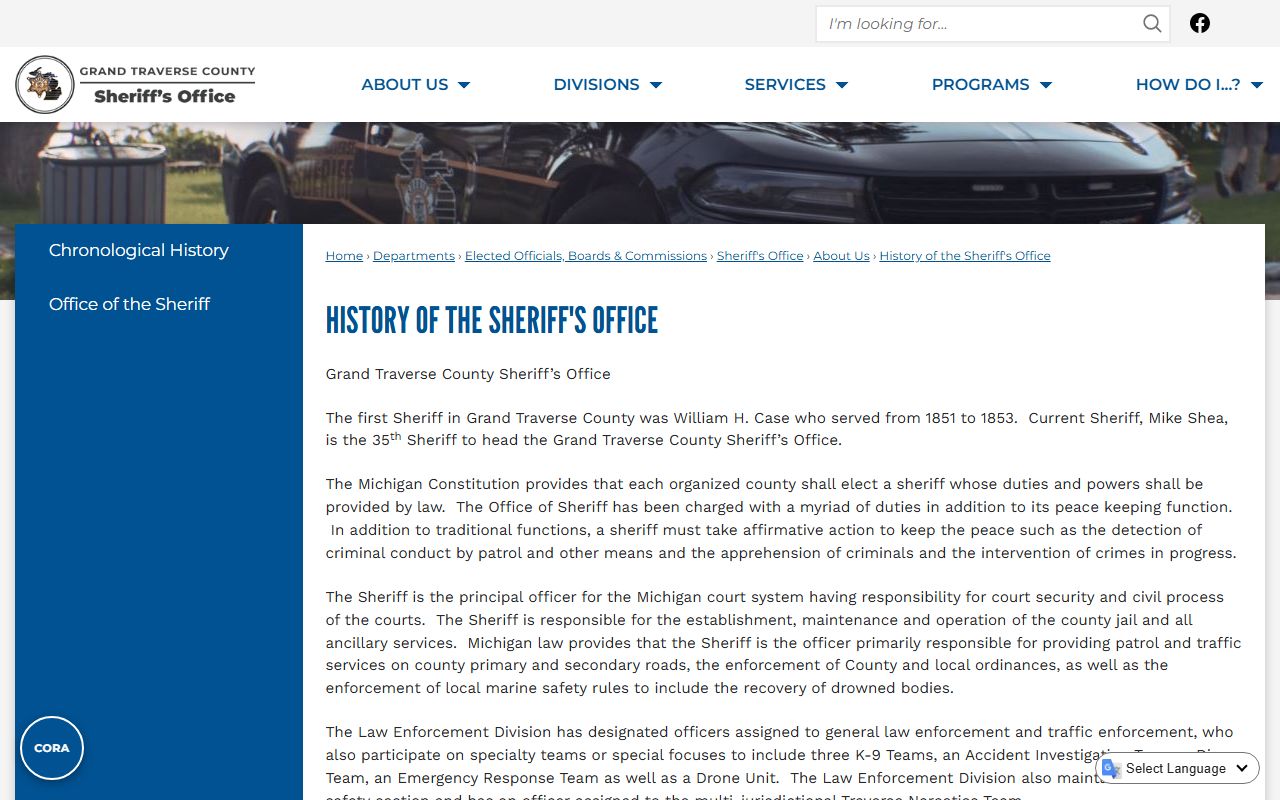
Court services have long been a core sheriff function, and the same office that houses defendants also staffs the courtroom, ties the custody side of a case directly to its docket calendar.
Money on a person's account can shape hearing readiness too, since bond and fees run through separate systems. The Inmate Funds Deposit page explains how deposits reach someone held in the correctional facility.
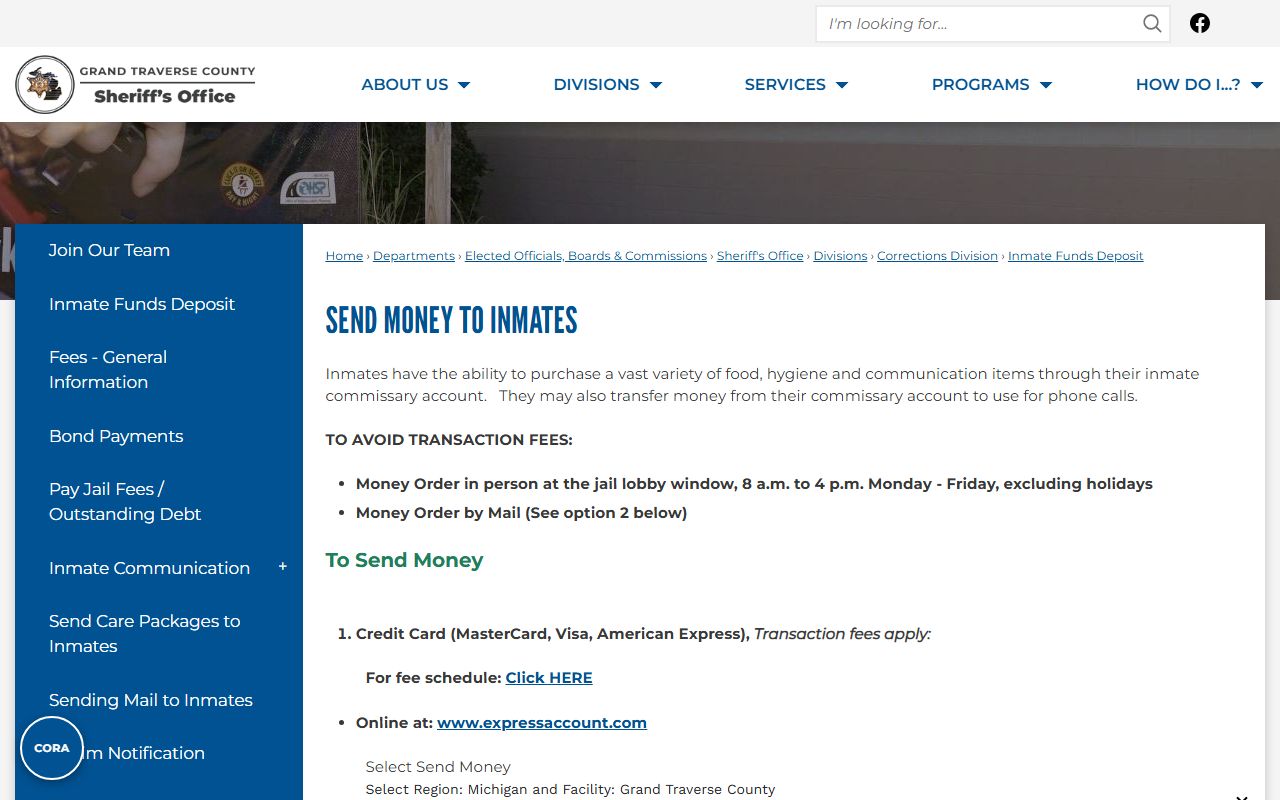
Bond posted to secure release is recorded on the criminal docket, and once bond clears, the next docket entry is usually a release or a scheduled appearance rather than a custody hold.
Hearings are not the only appearances a defendant makes, and video visitation shows how the jail keeps people connected between court dates. The Inmate Visitation page lays out the video-only visit rules.
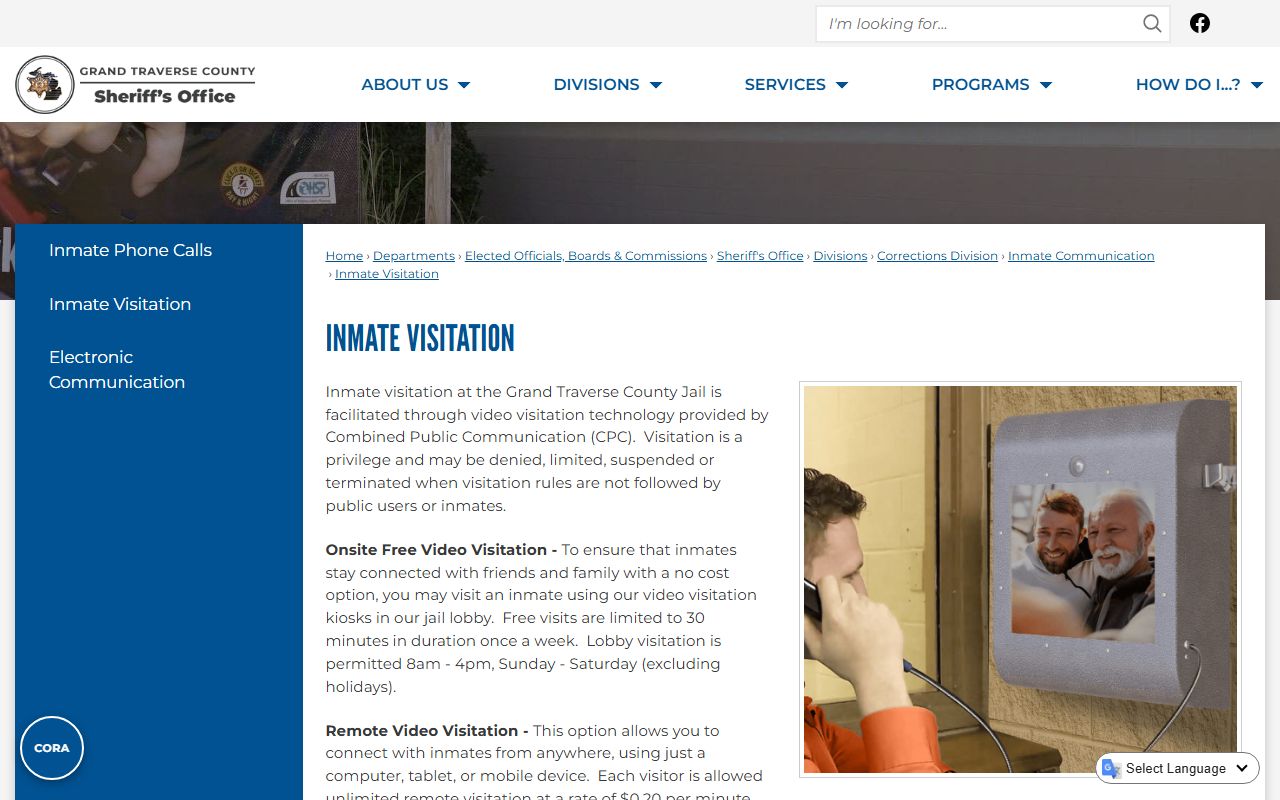
The same video technology that supports family visits can also support remote court appearances, which keeps a docket moving even when a defendant stays inside the facility.
Staying reachable matters when a hearing date shifts, so inmate communication tools tie back to the docket calendar. The Inmate Communication page describes how messages and calls are handled at the jail.
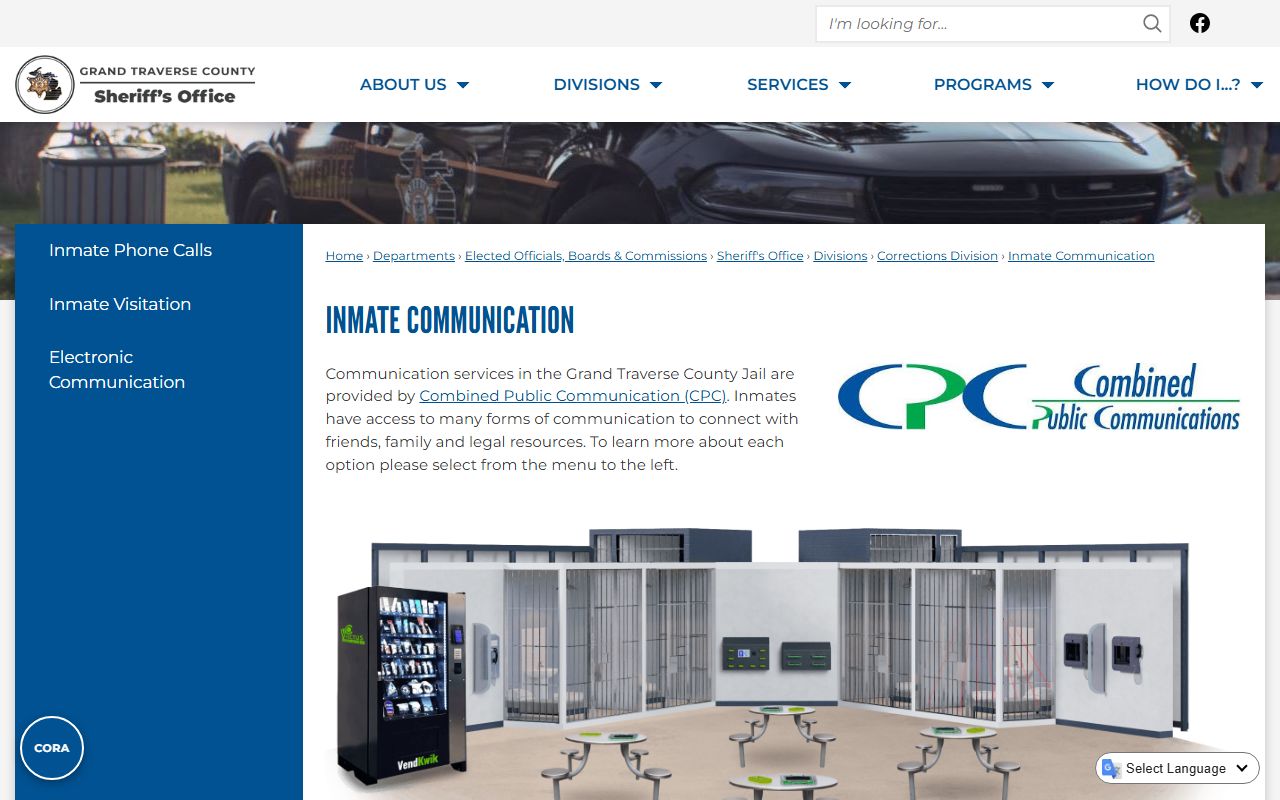
Reliable contact lets a defendant coordinate with counsel about the next docketed conference or trial notice, which is often where a case is resolved.
Written mail is the last channel that connects custody to the court schedule, and its rules are strict. The Sending Mail to Inmates page lists what the jail accepts and returns.
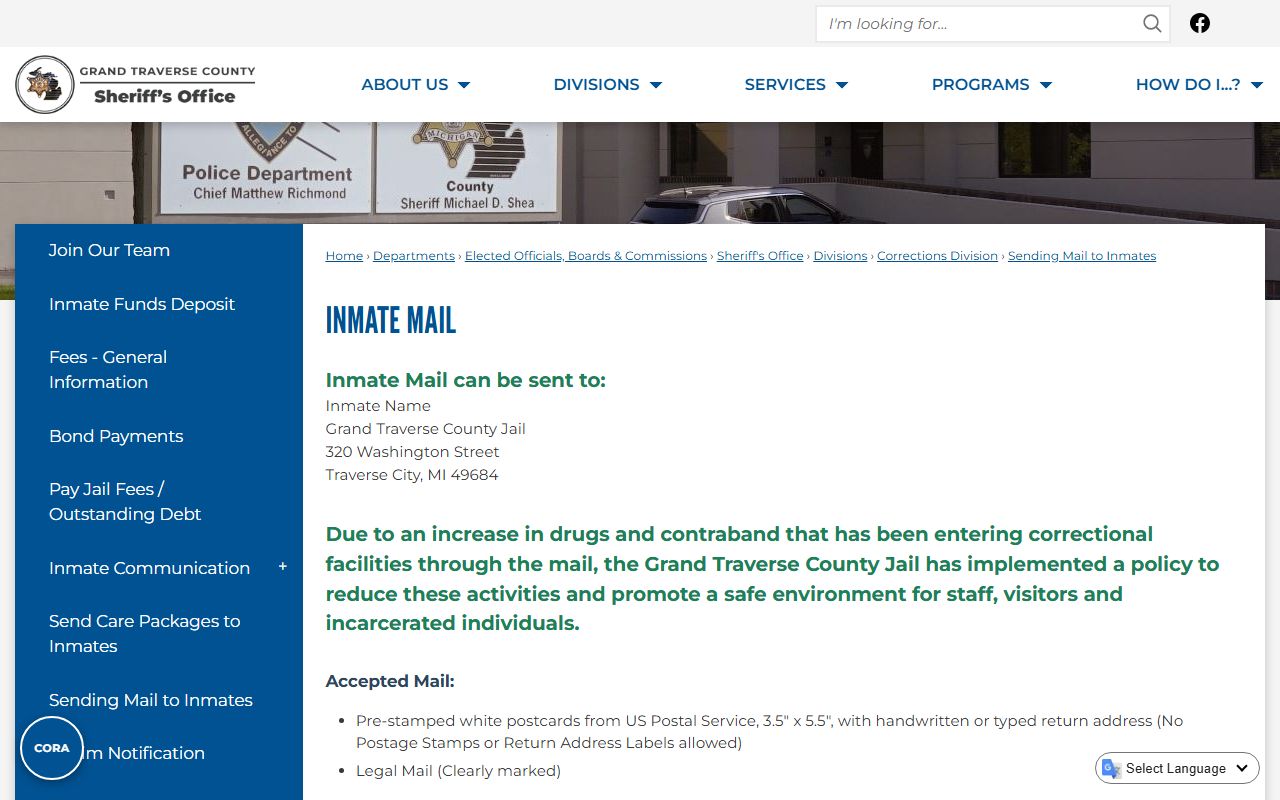
Legal mail is treated separately from personal mail, which lets a defendant receive court notices and docket updates even under the tightened contraband rules. For live custody status while a case is pending, the county points the public to MI-VINE, and the full booking and jail detail lives on the Grand Traverse County inmate records page.
Docket vs. Full Case Record
The docket and the case record answer different questions. A docket tells you what happened and when. A full case record shows you the documents behind each event. Both are public for most civil and criminal circuit matters, but they are accessed in different ways and used for different purposes. The comparison below sets them side by side.
| Docket | Full Case Record | |
|---|---|---|
| Format | List of dated entries | Complete filings and orders |
| Access | Free online in the county portals | Copy fees or a records office visit |
| Use | Track case progress and hearing dates | Legal review, evidence, certified copies |
| Contains | Date, action, proceeding, header | Motions, briefs, exhibits, signed orders |
For a quick status check, the docket is enough. For anything filed in another court or used to prove an outcome, a certified copy from the county clerk's records office is the reliable path. The detailed charges, pleas, and sentencing that a docket only summarizes are laid out in full in the Grand Traverse County criminal court records. The docket gets you oriented, and the case file gives you the proof.