
Grand Traverse County Arrest Records and Charges
A Grand Traverse County arrest record is the account of an arrest itself. It names who was taken into custody, which agency made the arrest, the arresting officer, and the date. Booking happens at the county jail, run by the Corrections Division. That booking detail and live custody status sit on the jail side, not in the court file. The formal charges are a separate record. Once someone is arrested, the county Prosecuting Attorney reviews the case and decides what to charge. Those charges are filed with the court clerk and become the court charge record.
The two records answer different questions. The arrest and booking side shows custody, meaning who is in the jail and when they were booked. For the jail roster, booking detail, and MI-VINE custody status, the Grand Traverse County inmate records page is the right stop. The court charge record shows what the prosecutor filed and how each count moves through the case. Charges after arrest can change, get reduced, or be dropped before anything is decided. The full case file, pleas, and sentence live in the criminal court records.
Michigan's trial courts follow a statewide framework for how case records are created and kept, described on the state's trial-court records management page.
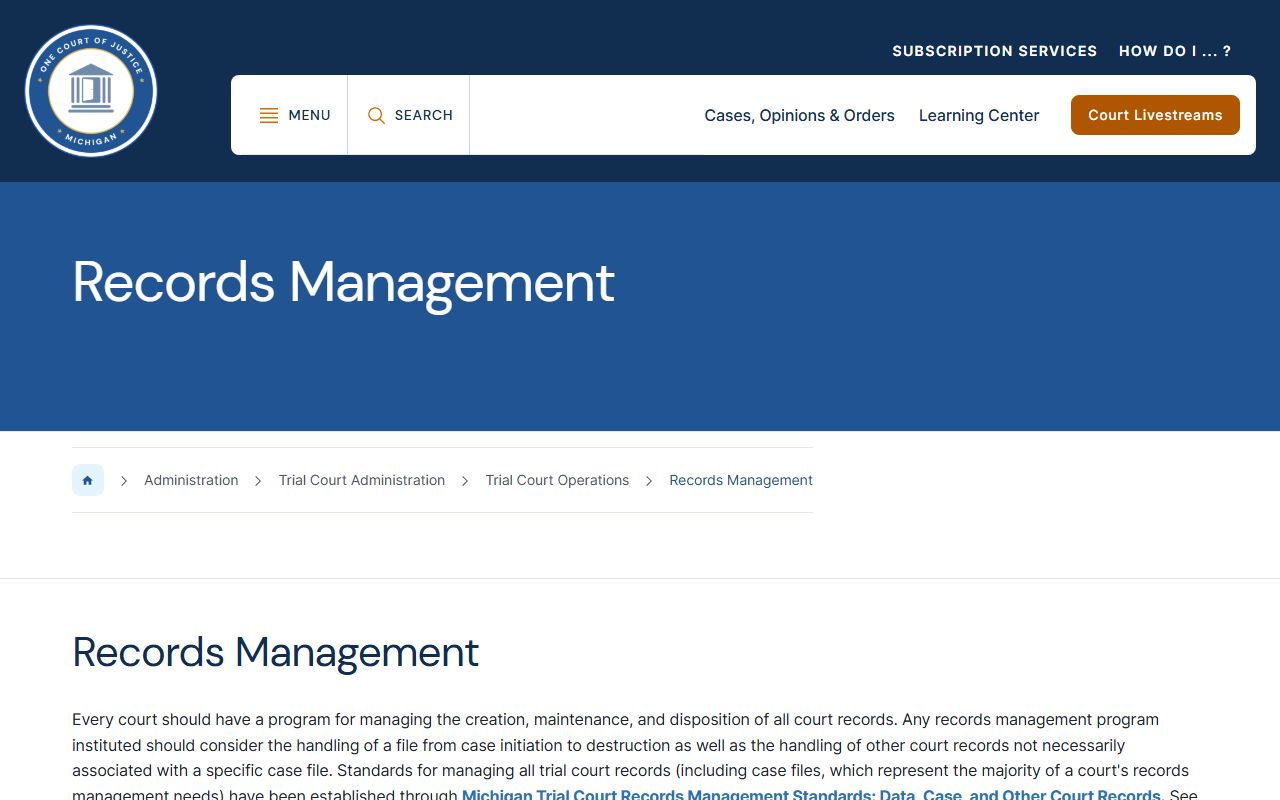
That framework is one reason an arrest booking and a filed charge end up in separate systems, one held by the sheriff and one held by the court clerk.
Search Grand Traverse County Arrest Records
Charges filed in the county show up in the public case search. Felony charges bound over to the 13th Circuit Court appear in the criminal case search. The county's Civil and Criminal Records Search hub links both the criminal and civil databases. The criminal database holds felony cases only. Misdemeanor charges stay with the 86th District Court and are not in the circuit criminal index. Arrest and booking detail is not in these court databases. That sits with the jail.
- Open the county criminal case search from the Civil and Criminal Records Search hub.
- Search by defendant last name and first name, or by case year and case number. A partial last name works if the first name is left blank.
- Pick the county from the dropdown, then submit the query.
- Open the case and read the charge list, each count's code, degree, and current status.
A county felony case record carries the arrest data right in its header. Sample circuit records show a complaint number, an arrest date, the arresting officer, the arraignment date, and identifiers such as a state ID number and a CTN. So the court charge record and the arrest record overlap on one screen, even though booking detail stays with the jail.
Some charges will not appear online. The criminal database omits misdemeanors, and clean-slate rules can hide set-aside convictions. When a record is missing, the records office terminal, a phone call, or a written records request fills the gap. Statewide criminal-history checks are covered further down.
How Grand Traverse County Charges Get Filed
The charge record begins after the arrest, when the prosecutor authorizes a charge. In Michigan, most felony cases start with a complaint in the 86th District Court. The defendant is arraigned there. A preliminary examination tests whether there is enough evidence. If the judge finds probable cause, the case is bound over to the 13th Circuit Court. The prosecutor then files an information, the formal felony charging document. A grand jury indictment is also possible, but it is rare in Michigan. Misdemeanor complaints stay in district court from start to finish.
The felony path reads: arrest and booking, then complaint in district court, then arraignment, then preliminary exam, then bindover, then information in circuit court.
| Complaint | Information | Indictment | |
|---|---|---|---|
| Filed By | Prosecutor | Prosecutor | Grand Jury |
| Where Filed | 86th District Court | 13th Circuit Court | Circuit Court |
| Typical Use | Misdemeanors and the start of felonies | Felonies after bindover | Rare, serious felonies |
How the clerk keeps and shares these charging documents is set by court rule, spelled out in Michigan Court Rule 8.119.
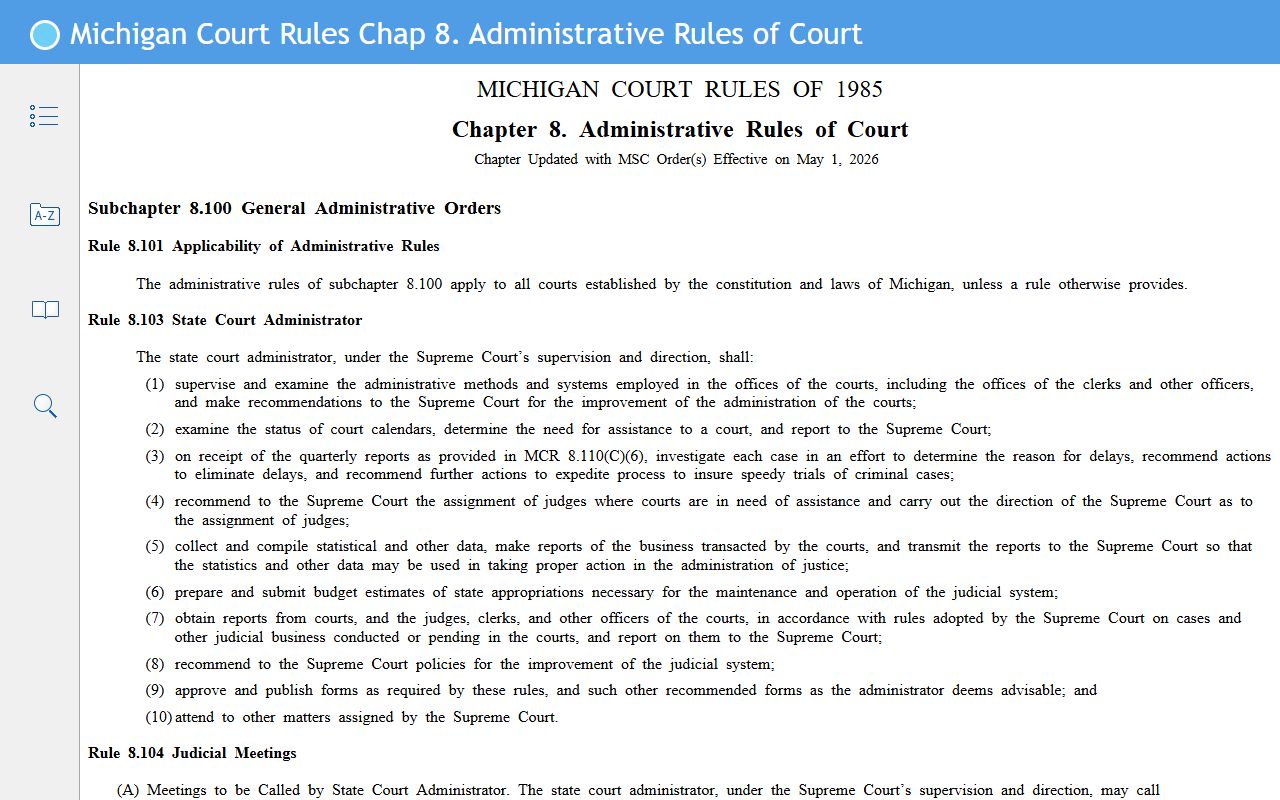
That rule is the reason a filed complaint or information is part of the public case file, while certain attachments stay restricted.
Grand Traverse County Charge Codes and Levels
Each charge ties to a specific Michigan statute. The court record shows an offense code, a short description, and a degree or severity level. One arrest can produce several separate charges, listed as counts. A single case can carry a felony count and a misdemeanor count at the same time. Michigan sorts offenses into a few broad levels.
- Felony
- A serious crime handled in circuit court that can carry more than one year in prison.
- Misdemeanor
- A lower-level crime handled in the 86th District Court, with jail time under a year or a fine.
- Civil infraction
- A ticketed violation, like most traffic matters, that is not a crime and carries no jail.
- Count
- One separate charge within a single case; a case can list several.
The state court system publishes a plain-language legal glossary that defines the terms found on a charge record.
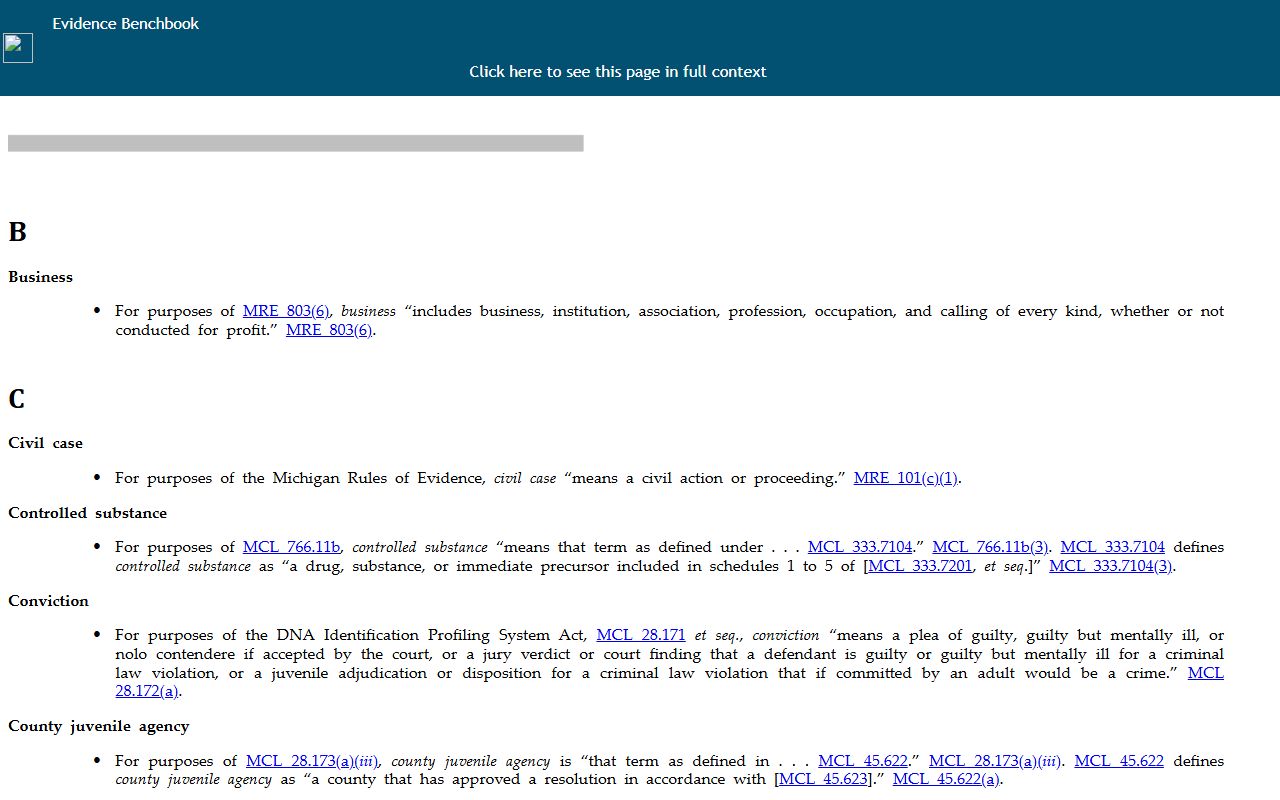
Reading those definitions alongside a case file makes the counts, degrees, and dispositions easier to follow. On a county felony record, each count sits in an offense table with fields for count number, plea, conviction, offense, suffix, description, degree, and any associated charge. That layout lets you see how one arrest split into several charges and how each one resolved.
Charge Status in Grand Traverse County Records
A charge is not fixed once it is filed. Charges after arrest can be amended, reduced, added, dropped, or dismissed as a case moves. The status field on a Grand Traverse County charge record tells you where each count stands. Sample circuit records show entries like felony information, charge reduction, and a motion or order of nolle prosequi.
| Status | What It Means |
|---|---|
| Pending | The charge is filed and the case is active, with no final outcome yet. |
| Amended / Reduced | The prosecutor changed the charge; a reduction swaps it for a lesser offense. |
| Bound Over | The district court sent the felony charge up to circuit court. |
| Dismissed | The court dropped the charge; with prejudice bars refiling, without prejudice allows it. |
| Nolle Prosequi | The prosecutor chose to drop the charge. |
Note: A dropped or dismissed charge can still appear in the public case file even though it never led to a conviction.
Who Files Charges in Grand Traverse County
Charges are not decided by the police. In Grand Traverse County, the elected Prosecuting Attorney, Noelle Moeggenberg, and her staff review each arrest and decide what to file. Chief Assistant Prosecuting Attorney Kyle F. Attwood helps lead the office. The office handles felony and misdemeanor cases, sexual assault, and domestic violence work.
The prosecutor takes part in the charging, plea, and sentencing flow. The Prosecuting Attorney office can confirm case status by phone. Defendants who cannot afford a lawyer are matched with court-appointed counsel through the county's indigent-defense system.
Charges vs. Convictions
A charge is an accusation. A conviction is a finding of guilt. The two are easy to confuse on a record, but they carry very different weight. A person can be charged and later cleared, and the charge alone proves nothing.
| Charge | Conviction | |
|---|---|---|
| Stage | Accusation filed | Verdict or guilty plea |
| Burden of Proof | Probable cause | Beyond a reasonable doubt |
| Decided By | Prosecutor | Judge or jury |
| Public Record | Yes | Yes |
Statewide Criminal History Lookups
County case search covers local charges. A full criminal history rolls up at the state level through the Michigan State Police. The public name-based tool is ICHAT, a paid search. A fingerprint-based personal record check through the state police is another route and carries a fee. What can be shared from these systems is limited by law.
- ICHAT, the state police name-based public criminal-history search, for a fee.
- The Michigan State Police fingerprint-based personal record check, which requires prints and a fee.
- The court of conviction for a certified copy of a specific case.
- The county case search for local circuit-court charges.
State law sets what a criminal-history search can release, under MCL 28.242a, the criminal-history dissemination statute.
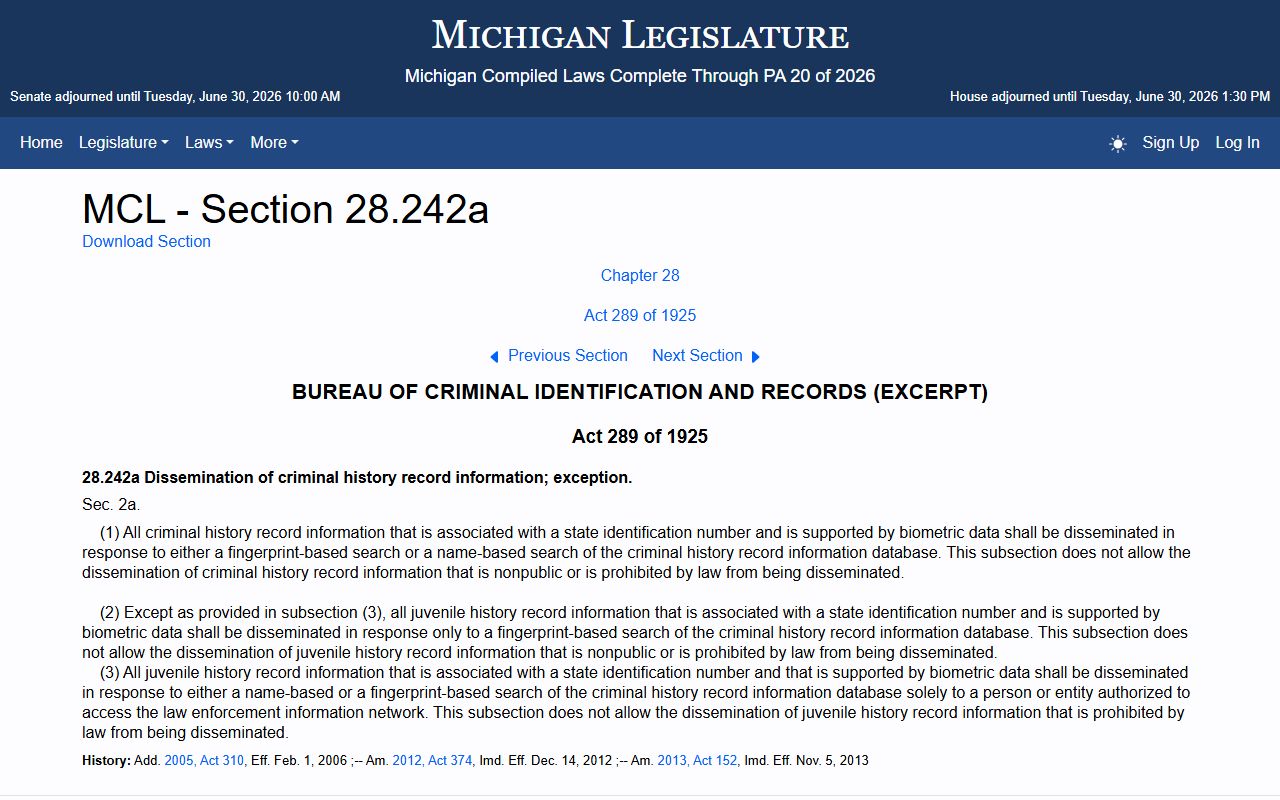
Those limits are why a statewide report and a raw county case file do not always show the same thing.
Sealed vs. Expunged Records
Some charge records come off public view over time. Michigan uses a set-aside process, often called expungement, under MCL 780.621g and MCL 780.623, along with an automatic clean-slate program for qualifying cases. A set-aside conviction stops showing in public-facing systems, but the state still keeps the underlying record under law.
| Sealed | Expunged / Set Aside | |
|---|---|---|
| Visibility | Hidden from public view | Removed from public-facing systems |
| Law Enforcement | Limited access remains | State retains the record under law |
| Michigan Path | Court order in narrow case types | Set-aside statutes plus automatic clean slate |
Background Check Considerations
There is a difference between a casual lookup and a formal background check. A quick case search answers a personal question. A background check used for hiring, housing, or credit falls under the federal Fair Credit Reporting Act. Those reports must meet accuracy and notice rules that a raw public search does not.
Important: Grand Traverse County Court Records is not a consumer reporting agency under the FCRA, and nothing here may be used for employment, tenant, credit, or insurance screening.
Restricted Charge Records in Grand Traverse County
Not every charge record is open. Juvenile charges are kept in family-court records with limited public access, and adoption files are closed. Personal protection order cases are pulled from the public online civil search and handled by the clerk directly. Set-aside convictions drop off public systems. Ongoing investigation material and records with personal identifiers can also be withheld or redacted.
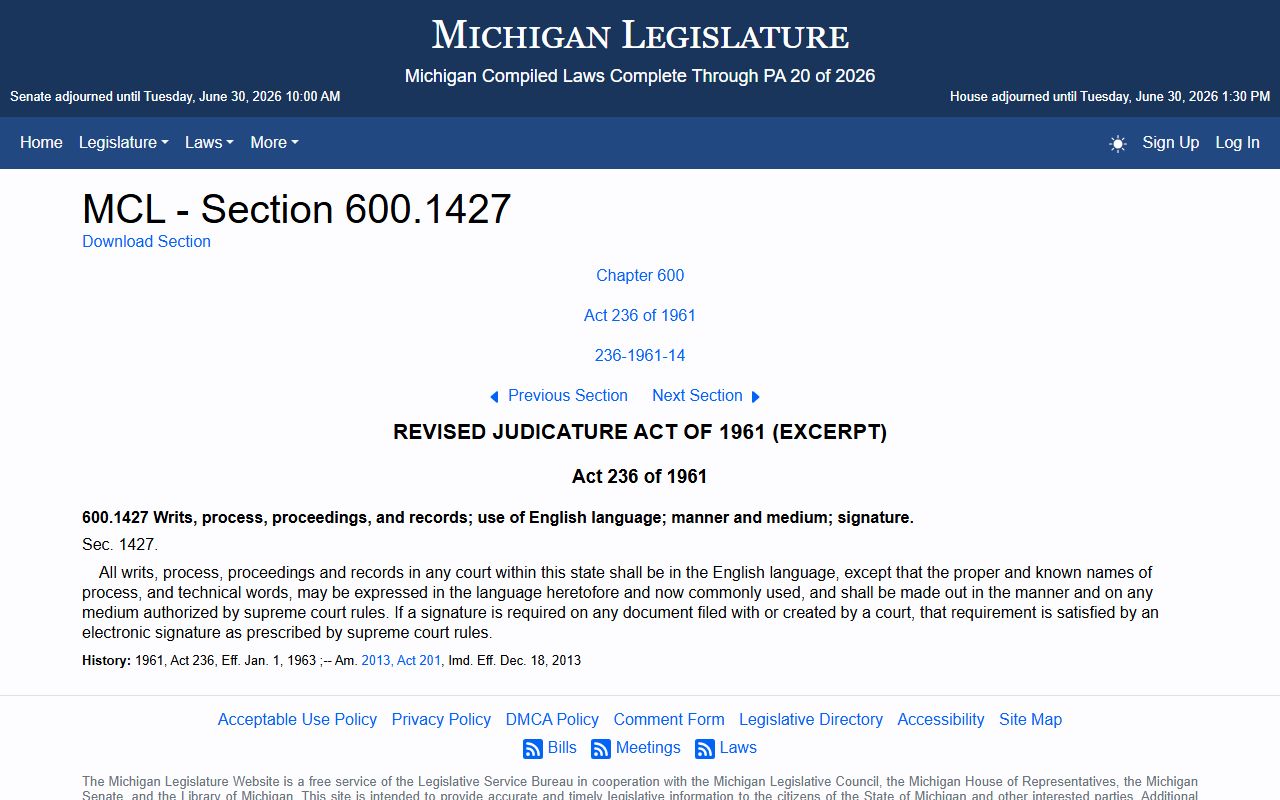
Michigan statutes decide which case records stay open, including the probate-records rule at MCL 600.1427, which keeps probate register records public unless a law or court order makes them confidential.
The same open-by-default, closed-by-exception pattern governs the charge records held by the county clerk. When a record is sealed, restricted, or simply not online, the county records office is the place to confirm what can be released.